Tuesday, June 3, 2014

What the Bible Teaches about Marriage, Divorce, and Remarriage


Marriage is a central theme of the Bible. God began marriage with Adam and Eve in the Garden of Eden. God’s law for marriage is that a man and woman be joined by a vow of loyalty so long as both partners are alive.

Under the Law of Moses, many rules and regulations about marriage were part of the Law. Marriage of near kin was forbidden, and Moses gave permission for divorce that was not part of God’s will for marriage from the beginning. The Law decreed that sexual immorality be punished by stoning to death, but because of the hardness of the hearts of Israel, Moses permitted them to write a bill of divorce and put their wives away because of sexual immorality. The person put away, divorced because of sexual immorality, was permitted to marry again, but not permitted to return to their first husband after being married to someone else.

The way that God dealt with marriage issues under the Law of Moses teaches us something about God’s will for marriage. God made provision for man’s failures. He often forgave marriage sins and used weak people to accomplish His purposes. God never overlooks sin, and always requires an accounting for sin, but by His love has paid the account in full through Jesus Christ for all who believe in Him. We should expect God’s grace and mercy to extend to penitent past violators of God’s marriage law today, just as He has always extended His grace and mercy to those who love and serve Him.

Traditional teaching on marriage, divorce, and remarriage concludes that God does not recognize or count marriages made against His will as being marriages in fact. Therefore it is concluded that people who married against the will of God are not really married, but living in adultery.

A study of all the Bible teaches about marriage will convince us that the traditional "living in adultery" understanding of what Jesus taught in Mat 19 is not supported by the general teaching of the Bible. What Jesus said in Mat 19 agrees with the Law and the Prophets. Jesus did not give a new marriage law. Jesus taught about the existing marriage law that was given in the beginning when Adam and Eve were joined as husband and wife in the presence of God.

God’s will for marriage is that one man be married to one woman for as long as they both live. God wants that relationship to be unselfish, with each person concerned for the needs of the other person. They are to be one flesh, and to leave father and mother and cleave to each other.

God commanded that mankind should not destroy this blessed relationship. The fact that God forbade man to destroy marriage surely implies that man can destroy marriage. The Bible is full of stories of how men and women sinned regarding God’s marriage law. Because of the hardness of the hearts of Israel, in that they did not want to obey God’s marriage law, Moses permitted them to divorce their wives because of sexual immorality, and to give them a bill of divorce so that they could go and marry someone else, Deut 24:1-4. This was not God’s will from the beginning, because He wanted men and women to be faithful to each other as husband and wife until one partner died.

Yet God described as divorce His putting away, because of idolatry, of the ten northern tribes of Israel, Jer 3:8. This shows clearly that the sin of unfaithfulness justifies divorce. Divorce was not God’s plan from the beginning, but some sins justify divorce in some circumstances.

Jesus said to Israelites living under the Law of Moses that the only way a man could, without sin, divorce his wife and remarry (without the sin of adultery) was if the wife was guilty of sexual immorality, Mat 19:9. This one exclusion given to God’s covenant people living under the Law of Moses does not necessarily apply to all people and all situations. When we study the Bible carefully, we find that Ezra commanded Israelites who were married to foreign wives to get rid of those wives, Ezra 10:10-11. Paul showed that in a mixed marriage between believer and unbeliever, if the unbelieving partner departed, there is no requirement to continue the marriage relationship, 1 Cor 7:12-16. Paul indicated that Jesus did not speak about this situation of marriage of a believer to an unbeliever, 1 Cor 7:12-13. Thus we conclude that the context of Jesus’ instruction in Mat 19:9 is to a believer married to a believer, 1 Cor 7:10-11.

We know that the Israelites were not responsible for enforcing God’s marriage law on the people of other nations. Paul taught that Christians are not responsible for policing the morals of the unbelievers, 1 Cor 5:9-13. But when we study Mat 19:9 in light of what Paul said in 1 Cor 7:10-11, it becomes clear that the church is responsible for enforcing God’s marriage law within the church. Willful sin is very dangerous. When people plan to sin, knowing that it is against God’s will, it will be extremely difficult for them to ever repent, Heb 10:26-31. Divorce and remarriage between Christians cannot take place without sin: either the sin of unfaithfulness against the marriage by sexual immorality, or the sin of unjust divorce and remarriage against the will of God, which is called adultery.

Four wrong assumptions lead to misunderstanding how we must respond to violations of God’s marriage law.

1. That a marriage is only a real marriage if it is approved of God, and that a man cannot divorce his wife against the will of God.

The bible is full of history of marriages made against the will of God that were recognized by God as marriages in fact. Every marriage of more than one wife was against God's will, but God recognized those marriages. Men and women marry when they agree to live together as husband and wife. They can marry according to God's will or against his will, but it is a marriage either way.

Jesus said, "What God has joined together, let not man put asunder." God does not command against that which cannot be done. When Jesus said, "let not man put asunder," it implies that man can put asunder. Man can and does divorce and marry against the will of God.

2. That in the context of Mat 19, adultery can only mean having sexual intercourse with someone not your wife or with someone else's wife.

The scriptures show clearly that adultery has another meaning of unfaithfulness or apostasy. The way a word is used in context always determines the meaning intended. Modern meanings of English words cannot be used as authority for the original meaning of the word in Hebrew or Greek (the modern English meaning of baptism includes sprinkling of infants).

The Old Testament word translated adultery meant having sex with the wife of another man.

The New Testament word translated adultery refers to (male) paramour as the root meaning.
NT:3432
moichos (moy-khos'); perhaps a primary word; a (male) paramour; figuratively, apostate:

NT:3431
moicheuo (moy-khyoo'-o); from NT:3432; to commit adultery:
(Biblesoft's New Exhaustive Strong's Numbers and Concordance with Expanded Greek-Hebrew Dictionary. Copyright (c) 1994, Biblesoft and International Bible Translators, Inc.)

Both words have apostasy as one of the meanings. Jesus said that a man who lusts for a woman has committed adultery in his mind. A mind that forsakes faithfulness and longs to be connected with another is described by Jesus as committing adultery, Mt 5:28. How can we conclude that adultery can only mean having sexual intercourse with the wife or husband of another person?

In Mat 19 the context forces us to see that unjust divorce and remarriage equals adultery. The sin of apostasy against the wife and against God's will is clearly indicated. When we put all the emphasis on the physical act of sexual intercourse, we miss recognizing what is the real sin under consideration. Jesus did not say that a man who married a woman against the will of God continues to live in adultery so long as he is married to that woman. There is no place in the Bible where we can find the phrase "living in adultery." We should be able to describe things taught in the Bible with the same language the Holy Spirit used to teach the thing.

3. That Jesus taught the New Testament law on marriage and divorce in Mat 19, and that it is different from the marriage law of the Law of Moses.

While the penalty for violating marriage law was different under the Law of Moses and in the new covenant, the marriage law itself was unchanged, as Jesus clearly showed when he went back to Adam and Eve in the garden to explain how the marriage law has always been.

Jesus in Mat 19 was answering a question pertaining to marriage under the Law of Moses. He said nothing to indicate that he was talking only about the future circumstance in his kingdom, but He answered a question that was highly debated in the two rabbinical schools of His time. The school of Shammai held that divorce was only permissible for the cause of sexual immorality. The school of Hillel held that a man could divorce his wife if she fell into disfavor for any reason. The Pharisees were trying to cause problems for Jesus by getting him to speak on an issue that was bound to offend some of the audience. Jesus went back to the beginning and showed what God's will for marriage has always been.

Nothing Jesus said in Mat 19 differs in any way from what the Law of Moses taught about marriage. When Jesus said that from the beginning it was not God's will for divorce to take place, that does not mean that divorce is not called for in some circumstances. God divorced Israel (ten northern tribes) because of spiritual adultery. Jer 3:8 - "I gave faithless Israel her certificate of divorce and sent her away because of all her adulteries." NIV

4. That Jesus was teaching that there is no just cause for divorce other than sexual immorality, and that the guilty party does not have the right to marry after being divorced for sexual immorality.

Deut 24:1-4 directly refutes the idea that the guilty party in a divorce because of sexual immorality is not permitted to marry. Jesus said nothing about the right of the guilty party to remarry, but Deut 24:1-4 shows that the guilty party was permitted to remarry.

Also, there was and is another reason for ending a marriage relationship allowed in special circumstances; that of a believer married to an unbeliever who is unwilling to live peacefully. Ezra demanded that Israel send away their pagan wives who were involved in trying to prevent the restoration of Jerusalem and the temple worship. There is no record that men who sent out their foreign wives were forbidden to marry again.

Paul states clearly that a wife is not bound to an unbelieving husband if he chooses to leave her. Jesus did not address this issue at all in Mat 19, as Paul shows with these words in 1 Cor 7:12: "To the rest I say this (I, not the Lord)." NIV

The Bible does not teach that the person guilty of violating God’s marriage law by unjust divorce and remarriage must again divorce in order to repent, and then remain unmarried. The person divorced for the cause of sexual immorality was permitted to remarry, according to Deut 24:1-4. Nowhere in the scripture is the person divorced for just cause commanded not to marry. If the person divorced for just cause was permitted to remarry, why should we think that the person unjustly divorced would not have the right to marry once the preserving of the first marriage is no longer possible? When a Christian refuses to honor God’s marriage law by being faithful to their marriage partner, they may well be classed as an unbeliever. Those who refuse to honor and obey Jesus are not truly believers. See 1 Cor. Chapter 5, 2 Cor. 6:15, and 1 Tim 5:8. A Christian is not bound to continue a marriage where the partner is an unbeliever and unwilling to live with him or her. The scriptures teach that a former Christian who rebels against God and returns to slavery to the world is an unbeliever, 2 Pet 2:20-22

How Can One Repent Of Unlawful Divorce And Remarriage?

The problem in understanding about marriage, divorce, and remarriage is not with what God wants; it is about how violation of God’s marriage law can be repented and forgiven. The Bible does not teach that a subsequent marriage (after unlawful divorce) must be destroyed in order for repentance to take place. Some teach that the first marriage is still in effect, but Jeremiah said that returning to the partner of the first marriage after divorce and remarriage would pollute the land, Jer 3:1. Restoration of the first marriage after divorce was specifically forbidden by the Law of Moses, Deut 24:1-4.  Therefore restoration of the destroyed marriage is not a requirement of repentance. Repentance requires godly sorrow that produces a change of heart, a heart that desires to please God in all things, including remaining faithful to our legal wife at the time of our repentance.

God does recognize marriage vows that are made against His will. God’s approval is not needed for a marriage to be a marriage in fact. Men and women can marry according to the will of God, or against the will of God, and it is still a marriage. The marriage of Israel to four wives is testimony to this fact.

When one repents of past sins, he/she comes to God as one is, in whatever legal relationships are present, and determines to live faithful to Jesus including keeping lawful vows. True repentance will require that one does not again commit sin against a marriage partner, and against God.

It seems strange that some, under the law of the spirit of life in Jesus Christ, seem to have more harsh attitudes about sin and repentance than God demonstrated under the Law of Moses, the Law of Sin and Death. Perhaps the harsh attitudes result from thinking that we must be justified by keeping rules, and therefore all the emphasis is on keeping what are believed to be commandments. Often the commandments being enforced are actually opinions derived by human logic. We would do better to trust the righteousness that is in Jesus Christ, and endeavor to please Him in all things.

Conclusion

Harsh and unbiblical positions on divorce and remarriage have poisoned relationships between Christians. There are many among us who disfellowship those who do not agree with their unbiblical arguments that are handed-down traditional doctrine. What the Bible teaches about marriage in the Old Testament was written for our instruction, and we should learn from it. The Law of Moses was holy, righteous, and good. We should not refuse the lessons taught by the tutor who was bringing us to Christ.

We must avoid using unbiblical study methods in our approach to study of the Bible. Who believes what, or how smart or well educated the teacher, is not the source of Bible authority. The basic teaching of Scripture, considering everything the Bible has to say on the subject, is Bible authority. Many highly educated men have promoted false ideas and divided the church ever since the first century. Logical arguments based on wrong assumptions lead to false conclusions. The qualified student of the scriptures will depend on a broad and general understanding of a Bible topic as revealed in the complete teaching of the Holy Scriptures. Truth has nothing to fear from examination.


Isaac Meeting Rebecca

Friday, May 2, 2014

Jesus' Personal Spirit


Jesus, being a man, had both a human body and a personal spirit, in addition to the Holy Spirit within him. Jesus’ human body was conceived by the Holy Spirit within the womb of Mary, and Jesus is thus the Son of God by conception. Mary was a descendant of David, and Jesus is also called the son of man and the son of David, his inheritance from his mother. The fact that Jesus was tempted just as we are shows that he had a spirit that belonged uniquely to Jesus, separate from the Holy Spirit, since the scriptures teach that God is not tempted by evil. 

As we follow the gospel story, we are led to conclude that Jesus, son of man and Son of God, had a personal spirit that was formed at the time of his conception by the power of God. When Jesus died on the cross, that spirit went to the place of the spirits of the dead. Then that spirit was rejoined with the body of Jesus at the time of His resurrection, and later that human body and spirit were glorified and ascended into Heaven where Jesus reigns as Lord of Lords and King of Kings in his eternal glory which he had in the beginning as the Word of God.

Jesus sometimes struggled with the submission of his spirit to the Spirit of God within him. Many times Jesus referred to his humanity, and the scriptures reveal clearly that the man Jesus had a personal spirit that communicated with the Father and that interacted with the Holy Spirit. When Jesus prayed, he prayed to his Father, and struggled with his humanity.

Luke 22:41-45

He knelt down and prayed, saying, "Father, if it is Your will, take this cup away from Me; nevertheless not My will, but Yours, be done." Then an angel appeared to Him from heaven, strengthening Him. And being in agony, He prayed more earnestly. Then His sweat became like great drops of blood falling down to the ground.

The Scriptures teach clearly that the personal spirit of Jesus left his body at the time of his death on the cross.

Matt 27:50

And Jesus cried out again with a loud voice, and yielded up His spirit.

Luke 23:46

And when Jesus had cried out with a loud voice, He said, "Father, 'into Your hands I commit My spirit.' " Having said this, He breathed His last.

John 19:29-30

So when Jesus had received the sour wine, He said, "It is finished!" And bowing His head, He gave up His spirit.

Jesus’ spirit separated from his dead body and went to Hades at the time of his death on the cross. This is supported by the record, and by the sign of Jonah promised by Jesus. There has been much discussion about how the burial of Jesus fits the sign of Jonah, three days and three nights in the heart of the earth. When we realize that the heart of the earth is referring to Hades, we understand that the spirit of Jesus went to Hades at three PM on Thursday afternoon, just before the three hours of daylight that followed the three hours of darkness while Jesus died on the cross. When we count those three hours as one day, the spirit of Jesus was in Hades for three days and three nights. The Thursday crucifixion date suggests Jesus’ death in AD 30 when the Holy Sabbath of the Feast of Unleavened Bread fell on Friday, making the Sabbath reference, the burial of Jesus before evening of the High Sabbath, apply to Friday of the crucifixion week.

Luke 23:54-56

That day was the Preparation, and the Sabbath drew near. And the women who had come with Him from Galilee followed after, and they observed the tomb and how His body was laid. Then they returned and prepared spices and fragrant oils. And they rested on the Sabbath according to the commandment.

When Jesus died on the cross, his personal spirit, made alive by the Power of God, went to the lower parts of the earth. There are several scriptures that teach the fact of the visit of Jesus’ spirit to Hades during the time of His death.

Matt 12:40

For as Jonah was three days and three nights in the belly of the great fish, so will the Son of Man be three days and three nights in the heart of the earth.

Acts 2:26-28

Moreover my flesh also will rest in hope. For You will not leave my soul in Hades, Nor will You allow Your Holy One to see corruption. You have made known to me the ways of life; You will make me full of joy in Your presence.'

Eph 4:7-10

But to each one of us grace was given according to the measure of Christ's gift. Therefore He says:

"When He ascended on high, He led captivity captive, And gave gifts to men."

(Now this, "He ascended"--what does it mean but that He also first descended into the lower parts of the earth? He who descended is also the One who ascended far above all the heavens, that He might fill all things.)


1 Peter 3:18-19

For Christ also suffered once for sins, the just for the unjust, that He might bring us to God, being put to death in the flesh but made alive by the Spirit, 19 by whom also He went and preached to the spirits in prison,

Since the Bible is fundamentally a message about God’s plan for redeeming his people, students of the Scriptures need to look at each part of the Bible in comparison to the total message about salvation through faith in Jesus Christ. Being faithful to this framework of revelation will help readers to reach correct conclusions as they examine Bible truth. .

The Bible teaches truth by the student’s examination of Bible facts to make reasonable conclusions intended by the context of the message. The Holy Spirit gives an illustration of Paul making a deduction from what is written. The inference is contained in parentheses.

Eph 4: 7-10.

“ But to each one of us grace was given according to the measure of Christ's gift. Therefore He says: ‘When He ascended on high, He led captivity captive, And gave gifts to men.’ (Now this, ‘He ascended’--what does it mean but that He also first descended into the lower parts of the earth? He who descended is also the One who ascended far above all the heavens, that He might fill all things.)”

Paul says the fact that Jesus ascended on high implies that Jesus first descended to the lower parts of the earth. To learn what lower parts of the earth means in this context, one should study all that the Bible has to say on the topic. The scriptures reveal that “lower parts of the earth” is used to describe the place of departed spirits, called Sheol in the Old Testament, and Hades in the New Testament. Following are a few scriptures that use lower parts of the earth to refer to the place of spirits of the dead.

Psalms 63:9

But those who seek my life, to destroy it, Shall go into the lower parts of the earth.

Ezekiel 32:24

"There is Elam and all her multitude, All around her grave, All of them slain, fallen by the sword, Who have gone down uncircumcised to the lower parts of the earth, Who caused their terror in the land of the living; Now they bear their shame with those who go down to the Pit.

Ephesians 4:9

(Now this, "He ascended"--what does it mean but that He also first descended into the lower parts of the earth?

What is the problem related to Jesus’ spirit going to Hades? The scriptures teach that people are held accountable for the deeds done in the flesh, and that all will face judgment in the condition in which they die. Thus there would be no second chance for the spirits of the dead. This is the general rule and it covers all people this side of the cross. There is no second chance for those who reject the gospel in this life. The following scriptures teach that mankind will be judged for the things done in this life.

Heb 9:24-28

For Christ has not entered the holy places made with hands, which are copies of the true, but into heaven itself, now to appear in the presence of God for us; not that He should offer Himself often, as the high priest enters the Most Holy Place every year with blood of another-- He then would have had to suffer often since the foundation of the world; but now, once at the end of the ages, He has appeared to put away sin by the sacrifice of Himself. And as it is appointed for men to die once, but after this the judgment, so Christ was offered once to bear the sins of many. To those who eagerly wait for Him He will appear a second time, apart from sin, for salvation.

2 Cor 5:10

For we must all appear before the judgment seat of Christ, that each one may receive the things done in the body, according to what he has done, whether good or bad.

Rev 20:11-15

Then I saw a great white throne and Him who sat on it, from whose face the earth and the heaven fled away. And there was found no place for them. And I saw the dead, small and great, standing before God, and books were opened. And another book was opened, which is the Book of Life. And the dead were judged according to their works, by the things which were written in the books. The sea gave up the dead who were in it, and Death and Hades delivered up the dead who were in them. And they were judged, each one according to his works. Then Death and Hades were cast into the lake of fire. This is the second death. And anyone not found written in the Book of Life was cast into the lake of fire.

Beginning with the preaching of the gospel on the day of Pentecost, salvation is through faith in Jesus Christ by obeying the gospel and trusting Jesus in our lives. Before his death on the cross, Jesus forgave the sins of people according to his desire. Those who lived before the establishment of the new covenant were saved by faith in the message of God. We wonder about how the blood of Jesus reached and saved the ones who died before the cross. They could not be saved by animal sacrifices.

Heb 10:3-21

But in those sacrifices there is a reminder of sins every year. For it is not possible that the blood of bulls and goats could take away sins.

Therefore, when He came into the world, He said: "Sacrifice and offering You did not desire, But a body You have prepared for Me. In burnt offerings and sacrifices for sin You had no pleasure. Then I said, 'Behold, I have come--In the volume of the book it is written of Me--To do Your will, O God.' "

Previously saying, "Sacrifice and offering, burnt offerings, and offerings for sin You did not desire, nor had pleasure in them" (which are offered according to the law), then He said, "Behold, I have come to do Your will, O God." He takes away the first that He may establish the second. By that will we have been sanctified through the offering of the body of Jesus Christ once for all.

And every priest stands ministering daily and offering repeatedly the same sacrifices, which can never take away sins. But this Man, after He had offered one sacrifice for sins forever, sat down at the right hand of God, from that time waiting till His enemies are made His footstool. For by one offering He has perfected forever those who are being sanctified. But the Holy Spirit also witnesses to us; for after He had said before, "This is the covenant that I will make with them after those days, says the LORD: I will put My laws into their hearts, and in their minds I will write them," then He adds, "Their sins and their lawless deeds I will remember no more."

Now where there is remission of these, there is no longer an offering for sin. Therefore, brethren, having boldness to enter the Holiest by the blood of Jesus, by a new and living way which He consecrated for us, through the veil, that is, His flesh.


It was necessary that the blood of Christ be given for the redemption of all those who will be saved. We struggle to understand how the blood of Jesus reached back to those who died before the Gospel age. Perhaps their salvation was also through faith in Jesus? When Jesus’ human spirit visited Hades, every spirit there may have had the opportunity to hear Him. But why would they believe Him? We can assume those spirits had no additional evidence other that what they had been taught by God’s Prophets during their lives on earth, and the message of Jesus. In the account of the rich man and Lazarus, Abraham says that those who refuse to believe the Prophets would not even believe if one were to rise from the dead. We can understand that a man’s spirit coming down to Hades would have no basis for producing faith in the spirits there other than what they previously believed of the message of God through the prophets. Their faith would be based on evidence.

Luke 16:27-31

27 Then he said, 'I beg you therefore, father, that you would send him to my father's house, 28 for I have five brothers, that he may testify to them, lest they also come to this place of torment.' 29 Abraham said to him, 'They have Moses and the prophets; let them hear them.' 30 And he said, 'No, father Abraham; but if one goes to them from the dead, they will repent.' 31 But he said to him, 'If they do not hear Moses and the prophets, neither will they be persuaded though one rise from the dead.' "

The evidence of the prophet Isaiah is that the spirits of the dead are not respectful of all those who come down to the pit. Isaiah gives a picture of how the King of Babylon would be welcomed into Sheol. While this language is highly figurative, it does covey the idea that the spirits of the dead interact with spirits who come down to the pit. The spirits of the dead have understanding in the place where they abide.

Isa 14:9-17

"Hell from beneath is excited about you, To meet you at your coming; It stirs up the dead for you, All the chief ones of the earth; It has raised up from their thrones All the kings of the nations. They all shall speak and say to you: 'Have you also become as weak as we? Have you become like us? Your pomp is brought down to Sheol, And the sound of your stringed instruments; The maggot is spread under you, And worms cover you.' "How you are fallen from heaven, O Lucifer, son of the morning! How you are cut down to the ground, You who weakened the nations! For you have said in your heart: 'I will ascend into heaven, I will exalt my throne above the stars of God; I will also sit on the mount of the congregation On the farthest sides of the north; I will ascend above the heights of the clouds, I will be like the Most High.' Yet you shall be brought down to Sheol, To the lowest depths of the Pit. "Those who see you will gaze at you, And consider you, saying: 'Is this the man who made the earth tremble, Who shook kingdoms, Who made the world as a wilderness And destroyed its cities, Who did not open the house of his prisoners?'”


When Jesus’ spirit went down into Hades, what kind of welcome did his spirit receive? We can imagine the mocking of the unbelievers, as they welcomed Jesus’ spirit to the realm of the dead. However, there was one group of spirits there who had good reason to believe the message of God. The spirits of those who died in the flood must have realized the truth of God’s message through Noah as they were drowning. Unfortunately for them, it was too late for them to be saved physically. They died in the days of Noah buried in water because of their sins. Did God give them a chance to live by faith in Jesus Christ? That is God’s business, and not our place to decide. But we should have open minds to the evidence he has given us in the scriptures.

Jesus taught about the place of departed spirits in the story of the rich man and Lazarus. Some say that this is a parable, and not an actual story, but it makes no difference so far as the information about the spirit realm is concerned. Whether it is a true story or a parable, it contains the truth about spirits. Jesus always used illustrations based on principles of truth, and never used any illustration based on false information. Since we can establish that Jesus’ human spirit went to Hades following his death on the cross, and since Abraham and the spirit of the rich communicated in Hades, it seems reasonable that Jesus would have something to say in Hades. The great gulf that separated the wicked spirits from those in Abraham’s bosom did not hinder Abraham and the rich man from talking, therefore it would not hinder Jesus from speaking to any or all of the spirits in prison at the time of his visit.

Luke 16:19-31

"There was a certain rich man who was clothed in purple and fine linen and fared sumptuously every day. But there was a certain beggar named Lazarus, full of sores, who was laid at his gate, desiring to be fed with the crumbs which fell from the rich man's table. Moreover the dogs came and licked his sores. So it was that the beggar died, and was carried by the angels to Abraham's bosom. The rich man also died and was buried. And being in torments in Hades, he lifted up his eyes and saw Abraham afar off, and Lazarus in his bosom. Then he cried and said, 'Father Abraham, have mercy on me, and send Lazarus that he may dip the tip of his finger in water and cool my tongue; for I am tormented in this flame.' But Abraham said, 'Son, remember that in your lifetime you received your good things, and likewise Lazarus evil things; but now he is comforted and you are tormented. And besides all this, between us and you there is a great gulf fixed, so that those who want to pass from here to you cannot, nor can those from there pass to us.' Then he said, 'I beg you therefore, father, that you would send him to my father's house, for I have five brothers, that he may testify to them, lest they also come to this place of torment.' Abraham said to him, 'They have Moses and the prophets; let them hear them.' And he said, 'No, father Abraham; but if one goes to them from the dead, they will repent.' But he said to him, 'If they do not hear Moses and the prophets, neither will they be persuaded though one rise from the dead.' "


What did Jesus do while dead in the body but alive in the spirit? Peter wrote that Jesus preached the gospel to the spirits in Hades. Specifically, Peter says that the gospel was preached to the spirits of the disobedient people who were killed in the flood in the days of Noah. He says that the gospel was preached even to the dead, so that they might live according to God in the spirit.

1 Peter 3:18-20,

“For Christ also suffered once for sins, the just for the unjust, that He might bring us to God, being put to death in the flesh but made alive by the Spirit, by whom also He went and preached to the spirits in prison, who formerly were disobedient, when once the Divine longsuffering waited in the days of Noah, while the ark was being prepared, in which a few, that is, eight souls, were saved through water.

1 Peter 4:5-6,

“They will give an account to Him who is ready to judge the living and the dead. For this reason the gospel was preached also to those who are dead, that they might be judged according to men in the flesh, but live according to God in the spirit.”

What would Jesus have said to the spirits in Hades? He likely would have told them about who He is, what had happened to him, and what he was going to do. The spirits would have no way to verify that Jesus’ spirit had the power to leave Hades. Their only basis for faith would have been their belief of the Prophets and the words of Jesus. For those who perished in the flood, the remembrance of Noah and his construction of the ark, and the demonstration of the power of God in destroying the earth with water, may have given them a strong movement toward faith. Those people do fit a type of baptism. They were covered with water because of their sins, and thus died to sin. Their time on earth was ended by the decree of God, and they were buried in the flood. Thus their hearing the gospel in Hades and believing in Jesus could have given them the opportunity to be raised with Jesus. We do not have to understand such things. If God saw fit to give them a chance for salvation based on faith in Jesus Christ, in Hades, that is God’s business, and we should have no objection. It only applies to the circumstances then existing, and has no application this side of the cross. Jesus’ visit to Hades gives absolutely no support to the Roman Catholic doctrine of Purgatory, or to the fantastic fables told by the Gnostic heretics.

However, the action of Jesus in Hades may reveal how the spirits of the Old Testament saints were saved by the blood of Christ. Following his death on the cross, Jesus in his personal spirit visited them in Hades, and led the spirits of the faithful from Hades to heaven, where they are pictured with Christ.

Heb 12:22-24, -

“But you have come to Mount Zion and to the city of the living God, the heavenly Jerusalem, to an innumerable company of angels, to the general assembly and church of the firstborn who are registered in heaven, to God the Judge of all, to the spirits of just men made perfect, to Jesus the Mediator of the new covenant, and to the blood of sprinkling that speaks better things than that of Abel.”

The possibility of the spirit of man going into heaven is confirmed by the words of Paul. The third heaven is understood to be the dwelling place of God.

2 Cor 12:2-4

I know a man in Christ who fourteen years ago--whether in the body I do not know, or whether out of the body I do not know, God knows--such a one was caught up to the third heaven. And I know such a man--whether in the body or out of the body I do not know, God knows--how he was caught up into Paradise and heard inexpressible words, which it is not lawful for a man to utter.
While we may have difficulty answering questions raised by the fact of Jesus’ spirit visiting Hades, more problems result from denying the plain teaching of the scriptures. Jesus, being fully human as well as fully divine, had a spirit that belonged to him as a man, which we may consider separate from the Holy Spirit within him. This spirit of the man Jesus communicated with God, struggled in submitting to the will of God, was tempted in all points like we are, and yet without sin. If Jesus did not have the capacity to sin, then this entire story line falls short. God is not tempted. God cannot sin. God cannot die. Thus we are forced to examine the humanity of Jesus essentially separate from His divine nature, and then we understand his words on the cross, “Father! Father! Why have you forsaken me?” The human body of Jesus died on the cross, separated from the Father by our sins, and his personal spirit, made alive by the Spirit of God, visited Hades, preached the gospel there, ascended on high in the resurrected and glorified body of Jesus, and led captive a host of captives. This host of captives are those spirits who had been separated from God by sin, and were now cleansed by faith in the blood of Jesus and allowed to follow Jesus into the presence of God.

We should study the Bible by putting facts along side each other and following the story line that is presented in the scriptures as we seek understanding. Important Bible doctrines are taught in themes that can be followed through the Holy Scriptures, and be understood in their proper context. We need to examine all of our treasure of traditional doctrines of the church, and throw away those that are contrived to win arguments without being true to the simple teaching of the Holy Spirit contained in the scriptures. The Bible is best understood when we approach its teaching with a mind clear of prejudice, and open our heart to the revealed message. Our understanding and agreement is not needed to make God’s word true. His word is true, and all who are wise will submit to the simple truth revealed therein.

Our plea that the Holy Scriptures preserved in the Bible are the only basis for faith and teaching in the church sound hollow if we add contrived arguments, and proclaim them equal to clearly spoken truth. Derived arguments are subject to error, because the basic premises of the argument may be removed from the proper context, and thus become a pretext. If we stick with what is clearly taught, and use that as a basis for our faith, we will be pleasing to God and equipped for every good work, as we put into practice the things we learn. Learning is not enough, but we must live the pattern of Jesus Christ.

The facts are simple. Jesus had a personal spirit that separated from his body when he died on the cross. That spirit of Jesus visited Hades, and preached the gospel to the spirits there. The purpose for that preaching was so that they might have opportunity to live in the spirit by faith. The spirit of Jesus ascended from Hades, and led captivity captive, and gave gifts to men. That is the record. We may not understand it, but we can accept it by faith as the simple narrative of the scriptures.

Footnote: This article was begun in Katmandu, Nepal, Nov 2003, starting every morning at 5:30 AM while waiting on the cooks to wake up and start our coffee in the Marco Polo Business Hotel. We had free Internet service there, and I sent the file to my email address just before I left for home on Nov 10th. Ken Shoop and I had discussed this topic for twenty-two years without coming to an agreement. Finally I decided to put down my thoughts in organized form, and this is the result after about fifteen rewrites. Today is January 12, 2004.

Tuesday, April 22, 2014

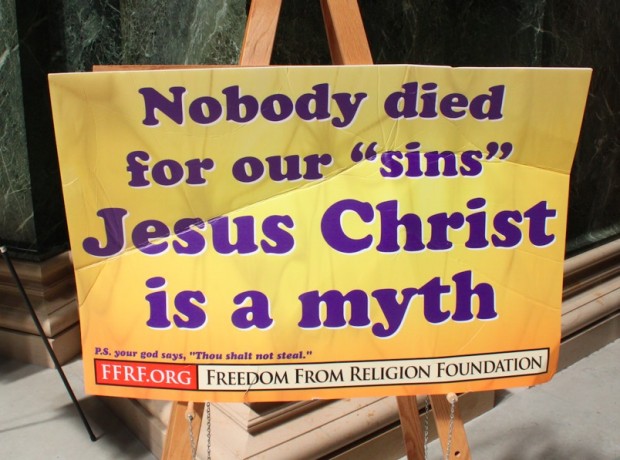
Angry Atheists

Image source: Freedom From Religion Foundation
Angry Atheists' Antics

Non-believers have been losing ground in the USA courts in their blatant attempts to separate Christian faith from the public arena. So they have decided to publicly display their own faith messages. Because they have no evidence for not believing in God, it is understandable that their message is lacking in integrity. Believers have evidence to back our faith in God. Atheists have only their circular logic and their feelings to back their arguments of disbelief. Atheists hate believers, as evidenced by their actions, because if God exists, they are in a heap of trouble. And in fact, they are hopeless of anything of lasting good coming of their lives. For them, death is the end of their existence. Or, as an atheist friend of mine once said, "Our lives are just dust in the wind."

So the atheists feel compelled to blaspheme the message of the gospel. They cannot successfully deny the death and burial of Jesus. The history of what happened is compelling, and established in secular history, and in the writing of eye witnesses.  His resurrection is also well established in history, and written in the blood of those who died because of their faith in the resurrection of Jesus. 

We should welcome the atheists to the platform of open examination of what each of us believes. Truth has no fear of examination. It is time we forced comparison of the doctrine of time and chance as the origin of life, pushed by the atheists into our public school curriculum, to the faith in creation by the God Who Is, the One who always existed. He is the source of all things, and the only rational explanation for the existence of the universe. 

The time has come for us to remove the lock that has been imposed by atheists upon the science of the existence of the Universe. We have stood by while they have endlessly changed their opinions about how things are, and watched as they proclaim from time to time what new thing they have discovered about the universe.

The more they discover, the more their ideas sound like the first chapter of Genesis. Now they have the universe starting with a unity, whatever they think that is.  The unity that the universe started with is the Great I Am.  

1 In the beginning God created the heavens and the earth.

2 Now the earth was without shape and empty, and darkness was over the surface of the watery deep, but the Spirit of God was moving over the surface of the water. 3 God said, “Let there be light.” And there was light! 4 God saw that the light was good, so God separated the light from the darkness. 5 God called the light “day” and the darkness “night.” There was evening, and there was morning, marking the first day.

6 God said, “Let there be an expanse in the midst of the waters and let it separate water from water.” 7 So God made the expanse and separated the water under the expanse from the water above it. It was so. 8 God called the expanse “sky.” There was evening, and there was morning, a second day.
9 God said, “Let the water under the sky be gathered to one place and let dry ground appear.” It was so. 10 God called the dry ground “land” and the gathered waters he called “seas.” God saw that it was good.


God's existence is proven by the existence and nature of the universe. The heavens declare His glory. 

The Heavens Declare His Glory

God's existence is proven by history. I challenge any atheist to explain the history of Abraham and the people who are connected with him  throughout history. The only logical explanation of Abraham is that he was called for a special purpose, to bring the One denied by the atheist, Jesus, into the world.  Jesus is the ultimate focus of the Abraham story, and the rock upon which the unbeliever has stumbled. 

Yes, Islam is part of the historical story involving Abraham. I am intrigued that atheists like Muslims better than Christians. Yes, their actions prove their affinity for anything that is not Christian.  But Islam demands submission to the Laws of the God of Abraham. Islamic militants hate what the unbelievers represent and teach. Given the opportunity, Islamic militants would cut off the heads of all the unbelievers who refuse to repent and believe, or at least force them to pay taxes for the right to live.  It is time for unbelievers to realize the terrible price they will pay where Islam returns to state power, and Islamic empire is re-established.

So how does the atheist explain this scripture?

Genesis 16:3 So after Abram had lived in Canaan for ten years, Sarai, Abram’s wife, gave Hagar, her Egyptian servant, to her husband to be his wife. 4 He had sexual relations with Hagar, and she became pregnant. Once Hagar realized she was pregnant, she despised Sarai. 5 Then Sarai said to Abram, “You have brought this wrong on me! I allowed my servant to have sexual relations with you, but when she realized that she was pregnant, she despised me. May the Lord judge between you and me!”

6 Abram said to Sarai, “Since your servant is under your authority, do to her whatever you think best.” Then Sarai treated Hagar harshly, so she ran away from Sarai.

7 The Lord’s angel found Hagar near a spring of water in the desert—the spring that is along the road to Shur. 8 He said, “Hagar, servant of Sarai, where have you come from, and where are you going?” She replied, “I’m running away from my mistress, Sarai.”

9 Then the Lord’s angel said to her, “Return to your mistress and submit to her authority. 10 I will greatly multiply your descendants,” the Lord’s angel added, “so that they will be too numerous to count.” 11 Then the Lord’s angel said to her,


“You are now pregnant
and are about to give birth to a son.
You are to name him Ishmael,
for the Lord has heard your painful groans.
12 He will be a wild donkey of a man.
He will be hostile to everyone,
and everyone will be hostile to him.
He will live away from his brothers.”

13 So Hagar named the Lord who spoke to her, “You are the God who sees me,” for she said, “Here I have seen one who sees me!”14 That is why the well was called Beer Lahai Roi. (It is located between Kadesh and Bered.) 


It should be of interest that God promised to Abraham that Ishmael would be the father of twelve nations, and the Arab story becomes a profound part of the historical evidence of the God of Abraham. 

Yes, unbeliever, explain Judaism, Islam, and Christianity. Are they the result of evolution?  If they evolved, you should support their existence. If they have some other cause, you should examine the evidence of the Cause of all things.

Welcome, dear atheist, to the platform of fair examination of reality. Stop hiding behind your faith in the impossible.  Your faith is indefensible. Time and chance did not cause the universe. Such a faith is not rational.

Saturday, April 19, 2014

Faith of Our Fathers


https://www.youtube.com/watch?v=OaPntncSK6s

 
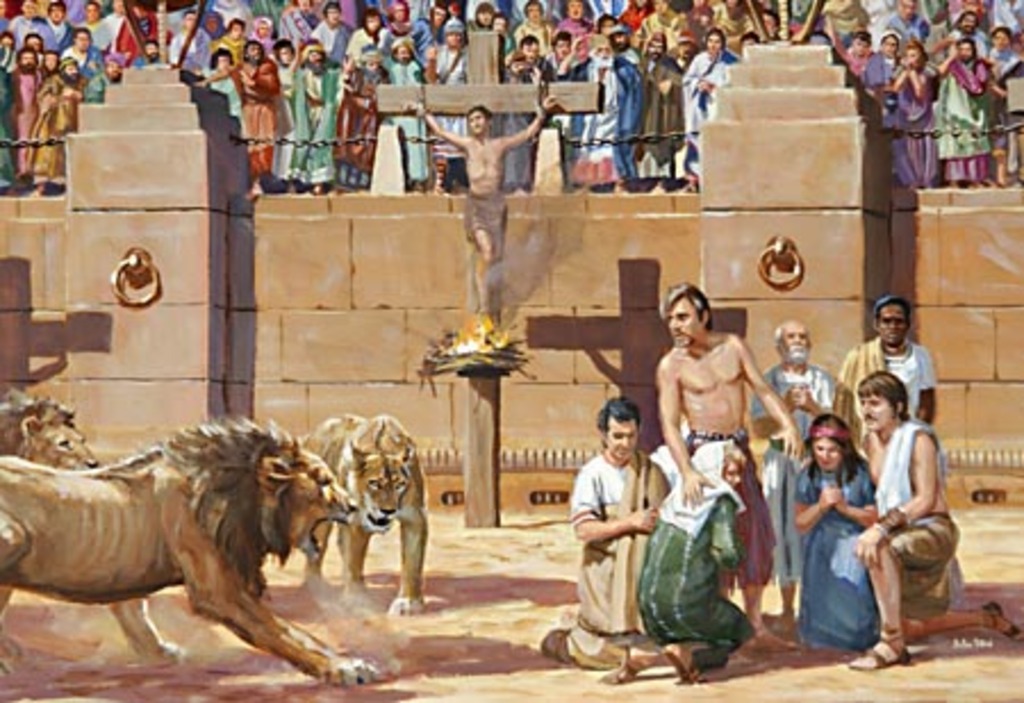
Death in the Roman Coliseum


Frederick W. Faber wrote a song about the faith of the early Christians who were martyred by the Roman Emperors.  The words of his song call us to consider the faith of the first century Christians who laid down their lives for Christ. Consider the words of the song published in 1849 titled “Faith of our Fathers.”

“Faith of our fathers! Living still In spite of dungeon, fire, and sword. O how our hearts beat high with joy When-e’er we hear that glorious word! Our fathers chained in prisons dark, were still in heart and conscience free; How sweet would be their children’s fate If they, like them, could die for Thee. Faith of our fathers! We will love both friend and foe in all our strife, And preach Thee too, as love knows how, By kindly words and virtuous life: Faith of our fathers, holy faith! We will be true to Thee till death.”

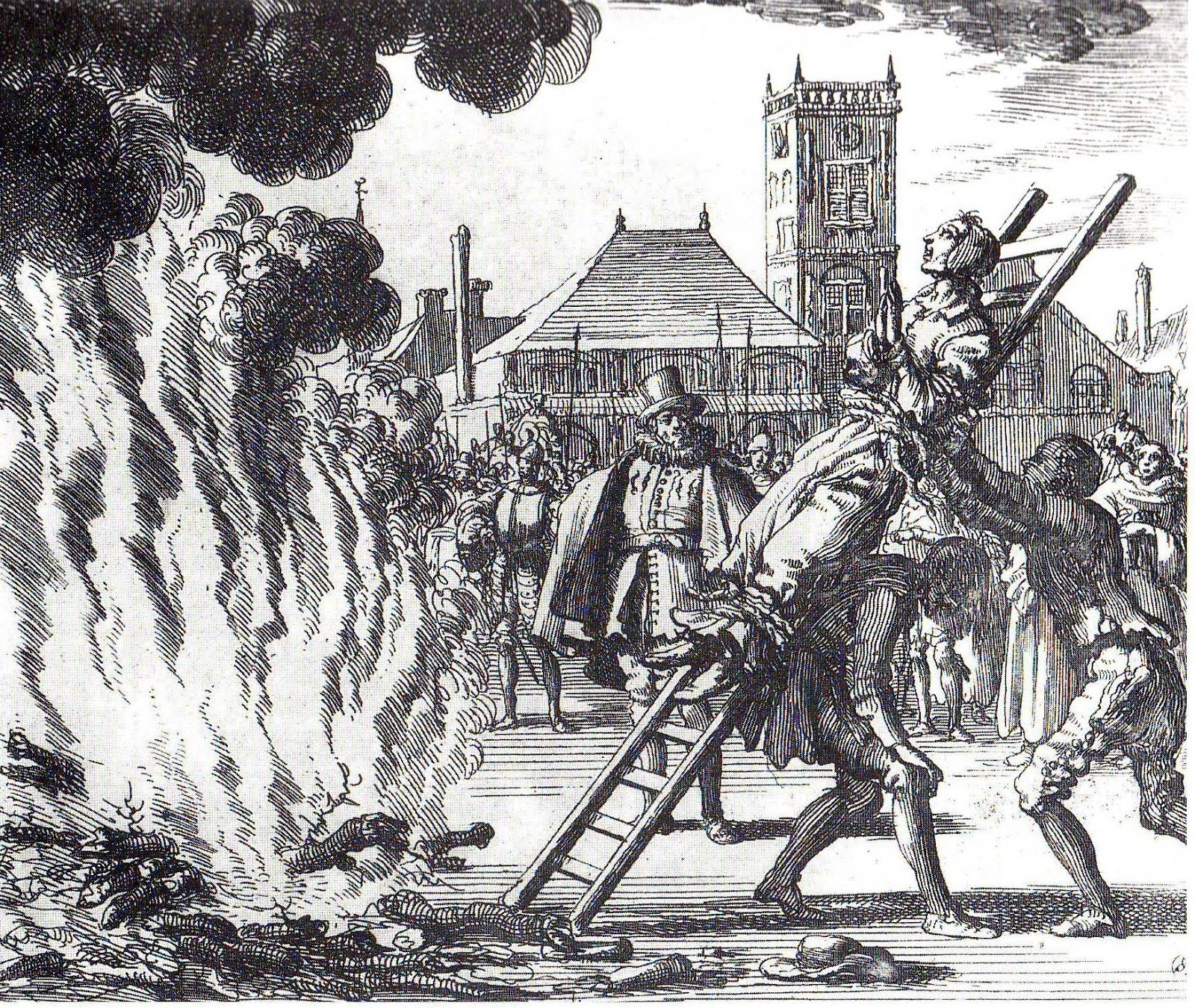
Sadly, the faith of early Christians was soon upset over various issues of human philosophy, church tradition and proclamations of church councils. Christians in the West became dominated by the bishop of Rome, and Christians in the East became dominated by the bishops of Constantinople, Antioch, Alexandria, and other large churches of the East. Conflict between East and West opened the doors for Islamic expansion from the seventh century until the thirteenth century. Then the inquisition brought the horrors of persecution by the apostate Holy Roman Empire upon Jews and upon Christians of conscience who refused to submit to the traditions of Rome. The control of religion by the state enabled the persecutions.  State sanctioned Protestant churches practiced similar atrocities upon those who refused to submit to their decrees.
State Persecution of Dissidents

Christians today who live in nations where religion is controlled by the state may be subject to persecution if they violate the religious decrees of the state connected religion. When we resist the powers of false religion and come under persecution, it is a blessing. No power can suppress true faith in Jesus Christ. Even if we die, we will be blessed abundantly.         

Missionary to Ecuador Jim Elliot wrote the words which seem prophetic of his death at the hands of tribal people he was trying to reach with a message about Jesus. He wrote “He is no fool who gives what he cannot keep to gain what he cannot lose.”


We cannot keep our physical lives, so we are blessed to give up our selfishness to gain eternal life in Jesus. There is a blessing in sacrifice for a just cause. The greatest cause to which anyone can dedicate his or her life is the good news of salvation in Jesus Christ. Whatever we give of the temporary means and circumstances of this life can not compare with the blessings promised to those who love and follow Jesus. As Paul wrote, “The Spirit Himself bears witness with our spirit that we are children of God, and if children, then heirs--heirs of God and joint heirs with Christ, if indeed we suffer with Him, that we may also be glorified together. For I consider that the sufferings of this present time are not worthy to be compared with the glory which shall be revealed in us. For the earnest expectation of the creation eagerly waits for the revealing of the sons of God.” (Rom 8:16-19, NKJV)

Faith of our fathers, holy faith! How sweet would be our fate if we, like them, could die for Thee! Jesus calls us to die to self and live for Him. Preach Jesus by kind words and virtuous life.


Acts 2:40 With many other words he testified and exhorted them saying, “Save yourselves from this perverse generation!” 41 So those who accepted his message were baptized, and that day about three thousand people were added.

The Fellowship of the Early Believers

42 They were devoting themselves to the apostles’ teaching and to fellowship, to the breaking of bread and to prayer. 43 Reverential awe came over everyone, and many wonders and miraculous signs came about by the apostles. 44 All who believed were together and held everything in common, 45 and they began selling their property and possessions and distributing the proceeds to everyone, as anyone had need. 46 Every day they continued to gather together by common consent in the temple courts, breaking bread from house to house, sharing their food with glad and humble hearts, 47 praising God and having the good will of all the people. And the Lord was adding to their number every day those who were being saved.

Saturday, March 29, 2014

What About Love?


A Mother's Love

My mother's love still brightens my heart. She loved me enough to switch my bare legs with a keen willow branch when I rebelled against her. She held me close and nurtured me when I was hurting. Her love lives on in my inner being.

I know that Jesus loved His mother. It is beyond my comprehension how He was able to look down at her from the cross, and to carry on with His plan to die a terrible death with her watching from the foot of the cross. He could have called ten thousand angels to destroy His enemies, and to deliver Himself from death. But, for the joy set before Him of bringing many sons to God, He despised the shame of the cross, and endured the agony in His mother's eyes. Jesus suffering so that others may live is the definition of sacrificial love, agape.

The English word love is used to translate Biblical words that mean erotic love, friendship love, and sacrificial love. It seems that some folks only think of erotic love when they see the word love. In their minds, love is associated with warm and fuzzy feelings, or a stirring in the loins. Some people who promote homosexual rights sometimes say that David and Jesus were homosexuals because it is said that David loved Jonathan, and Jesus loved John. This way of thinking is stupid.

The context within which a word is used determines the intended meaning, and sacrificial love should never be confused with erotic or sexual love.

After His resurrection, Jesus asked Peter three times if Peter loved Him. Peter responded with a different word that meant friendship. 
http://www.bible.ca/ef/expository-john-21-15-19.htm

John 21:15-17
Jesus said to Simon Peter, "Simon, son of John, do you love (agape) Me more than these?" He said to Him, "Yes, Lord; You know that I love (phileo) You." [How could Peter say, unequivocally, I love (agape) you, after he had so miserably failed him?] He said to him, "Tend My lambs." (16) He said to him again a second time, "Simon, son of John, do you love (agape) Me?" He said to Him, "Yes, Lord; You know that I love (phileo) You." He said to him, "Shepherd My sheep." (17) He said to him the third time, "Simon, son of John, do you love (phileo) Me?" [notice that the Lord changed the word from agape to phileo] Peter was grieved because He said to him the third time, "Do you love (phileo) Me?" And he said to Him, "Lord, You know all things; You know that I love (phileo) You." Jesus said to him, "Tend My sheep. [Peter was “grieved” not because Jesus asked him a third time, but because Jesus lowered the standard.] We can only imagine the heartbreak Peter was feeling. Before fear and isolation enveloped Peter during the crucifixion he would have boldly said, “Lord, how could you ask such a thing? Of course I love (agape) you!” But his actions showed how miserably he failed to agape the Lord. He had previously even denied friendship (phileo) with the Lord!  

Sacrificial love is the greatest gift of the Holy Spirit. I Cor 13 gives a listing of what agape love does, and it concludes that love is greater than faith and hope, because after faith and hope are realized, love endures. Love is eternal. Thus we are told that God is Love, and that His mercy endures forever.

But God's love demands justice and righteousness, and gives us the power to live righteous lives, when we love and trust in God. It was Jesus dying on the cross, while watching the despair in Mary's eyes, that fulfilled the justice and righteousness of God. The wages of sin is death. The sinner dies, he runs from God's presence, he hides in the bushes, and attempts to fashion clothing from leaves to cover his shame.  But God prepared suitable clothing, the righteousness of Jesus, that is available to all who believe in Jesus. 

But that loving embrace, like a mother's love, is only available to those who are willing, who come to Jesus and reside in Him. Destruction lurks for all who leave the protective love of God, who flee to the world for satisfaction, who reject the love of God. Stripes on bare legs with a willow switch is nothing compared to what the world gives to those who trust in themselves, and who reject the love of God.  

For those who accept and abide in the love of God, we must love one another. Love encourages fidelity, and fidelity demands obedience to the righteous principles of God, taught by His word. Love demands that we walk in the light of His love. Walk means we have some responsibility for doing good, for sharing the good news.  

Jesus, John, and Mary

John 15:12 “This is my commandment, that you love one another as I have loved you. 13 Greater love has no one than this, that someone lay down his life for his friends. 14 You are my friends if you do what I command you. 


John 19:23 When the soldiers had crucified Jesus, they took his garments and divided them into four parts, one part for each soldier; also his tunic. But the tunic was seamless, woven in one piece from top to bottom, 24 so they said to one another, “Let us not tear it, but cast lots for it to see whose it shall be.”This was to fulfill the Scripture which says,
“They divided my garments among them,
   and for my clothing they cast lots.”
So the soldiers did these things, 25 but standing by the cross of Jesus were his mother and his mother's sister, Mary the wife of Clopas, and Mary Magdalene. 26 When Jesus saw his mother and the disciple whom he loved standing nearby, he said to his mother, “Woman, behold, your son!” 27 Then he said to the disciple, “Behold, your mother!” And from that hour the disciple took her to his own home.


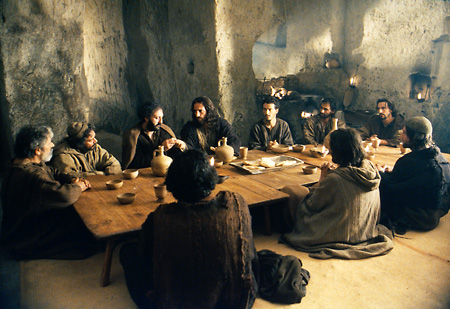
John, the apostle who sat next to Jesus at the Lord’s Supper, said this about God’s love: John 3:14 And as Moses lifted up the serpent in the wilderness, so must the Son of Man be lifted up, 15 that whoever believes in him may have eternal life.

For God So Loved the World


16 “For God so loved the world, that he gave his only Son, that whoever believes in him should not perish but have eternal life. 17 For God did not send his Son into the world to condemn the world, but in order that the world might be saved through him. 18 Whoever believes in him is not condemned, but whoever does not believe is condemned already, because he has not believed in the name of the only Son of God. 19 And this is the judgment: the light has come into the world, and people loved the darkness rather than the light because their works were evil. 20 For everyone who does wicked things hates the light and does not come to the light, lest his works should be exposed. 21 But whoever does what is true comes to the light, so that it may be clearly seen that his works have been carried out in God.”

Yes, walking in the light does not mean being enslaved to the lust of the flesh and doing as we please in rebellion against the clear teaching of God's word. Claiming love as permission for behavior that deviates from the revelation of righteousness in Jesus is not walking in the light. Our genetic composition is not license for living against the will of God. We must learn to control our natural tendencies to anger, avarice, lust, hatred, covetousness, and self destruction. We are called to walk in the light, and not in the natural order of time and chance. There is a way that seems right to mankind, but the end of that path is destruction. Love calls us to deny self, and to work for the good of all.

Yes, the world is enticing; looks good, feels good, lets one be their own guide (god?).  But the end is death and destruction.  We must flee from the idea of using the world's definition of "love" to encourage toleration for sin. Yes, we love all people, and Jesus came to call sinners to salvation. But when we come to Jesus and experience His love, we are called to love righteousness and holiness, and to join the battle against evil. 

Isaiah 5:20-- 
Woe to those who call evil good
and good evil,
who put darkness for light
and light for darkness,
who put bitter for sweet
and sweet for bitter!

The politically correct advocates of evolutionary living want to teach our children that actions forbidden by the teaching of the Bible are ok. The time has come for those who love Jesus to say "enough!"

Love is not permissive, but restrictive. Love involves using a willow branch to switch bear legs, to teach avoidance of my rebellion against righteousness. Love involved destroying the world with water, to wipe out sin and preserve righteousness. Love promises to destroy the worldly order of time and chance with fire. There is a battle between what the world considers love (permissiveness), and what has been eternally established as love (sacrifice for the good of all). 

Which side are you on?


Wednesday, March 5, 2014

The Vine and the Branches


I Am the True Vine

John 15

English Standard Version (ESV)

 https://www.youtube.com/watch?v=pqq-zyD2qMc

Jesus is the true vine. He is the source of life for God's people. Only those connected with him have life and produce fruit. And branches lose their connection if they do not bear fruit.  The fruit of being connected to Jesus is all spiritual blessings, revealed in a life that brings glory to God. 

Pruning is part of the process. God takes away the things that hinder. He removes the diseased sprigs. He cuts off the branches that do not produce fruit.

But the branch has responsibility to develop the connection to the vine, by growing and maturing the fruit of righteousness, keeping the commandments of God because of love for Him. 

Whoever abides in Jesus, and has the power of God within himself, will bear much fruit. It is the connection to the vine, and the life provided by the root of the vine, that produces fruit. The branch can do nothing by itself. 
Jn 15:15 “I am the true vine, and my Father is the vine dresser. 2 Every branch in me that does not bear fruit he takes away, and every branch that does bear fruit he prunes, that it may bear more fruit. 3 Already you are clean because of the word that I have spoken to you. 4 Abide in me, and I in you. As the branch cannot bear fruit by itself, unless it abides in the vine, neither can you, unless you abide in me.

5 I am the vine; you are the branches. Whoever abides in me and I in him, he it is that bears much fruit, for apart from me you can do nothing. 6 If anyone does not abide in me he is thrown away like a branch and withers; and the branches are gathered, thrown into the fire, and burned. 

7 If you abide in me, and my words abide in you, ask whatever you wish, and it will be done for you. 8 By this my Father is glorified, that you bear much fruit and so prove to be my disciples. 9 As the Father has loved me, so have I loved you. Abide in my love. 10 If you keep my commandments, you will abide in my love, just as I have kept my Father's commandments and abide in his love. 11 These things I have spoken to you, that my joy may be in you, and that your joy may be full.


Members of One Body

Branches of the True Vine are also called members of one body. When we understand how we become members of one body, we can understand how we become branches on the True Vine. We are reconciled to God in one body through the Cross. The blood of Jesus takes away our sins, and allows us to become connected to Christ in His body. 

This process of becoming connected to Jesus is an exercise of faith that Paul called obeying the gospel.  Rom 10: 11 For the Scripture says, “Everyone who believes in him will not be put to shame.” 12 For there is no distinction between Jew and Greek; for the same Lord is Lord of all, bestowing his riches on all who call on him. 13 For “everyone who calls on the name of the Lord will be saved.”

14 How then will they call on him in whom they have not believed? And how are they to believe in him of whom they have never heard? And how are they to hear without someone preaching? 15 And how are they to preach unless they are sent? As it is written, “How beautiful are the feet of those who preach the good news!” 16 But they have not all obeyed the gospel. For Isaiah says, “Lord, who has believed what he has heard from us?” 17 So faith comes from hearing, and hearing through the word of Christ.

So the gospel is the key to becoming connected in Jesus. The gospel is preached to all, and those who believe in Jesus to the point of being willing to put their trust in Him (by repentance and baptism) are connected to the vine, becoming members of one body.  When about 3000 were baptized on the day of Pentecost, God added them to the number of His people. 

Acts 2:36 Let all the house of Israel therefore know for certain that God has made him both Lord and Christ, this Jesus whom you crucified.”

37 Now when they heard this they were cut to the heart, and said to Peter and the rest of the apostles, “Brothers, what shall we do?” 38 And Peter said to them, “Repent and be baptized every one of you in the name of Jesus Christ for the forgiveness of your sins, and you will receive the gift of the Holy Spirit. 39 For the promise is for you and for your children and for all who are far off, everyone whom the Lord our God calls to himself.” 40 And with many other words he bore witness and continued to exhort them, saying, “Save yourselves from this crooked generation.” 41 So those who received his word were baptized, and there were added that day about three thousand souls.

The Fellowship of the Believers

42 And they devoted themselves to the apostles' teaching and the fellowship, to the breaking of bread and the prayers. 43 And awe[e] came upon every soul, and many wonders and signs were being done through the apostles. 44 And all who believed were together and had all things in common. 45 And they were selling their possessions and belongings and distributing the proceeds to all, as any had need. 46 And day by day, attending the temple together and breaking bread in their homes, they received their food with glad and generous hearts, 47 praising God and having favor with all the people. And the Lord added to their number day by day those who were being saved.


So that is how we get attached to the vine, how we become members of one body. We are added by God when we hear and believe the gospel enough to put our trust in Jesus by repenting and being baptized in the name of Jesus Christ.  We become part of the household of God. 

Eph 2:17,  And he came and preached peace to you who were far off and peace to those who were near. 18 For through him we both have access in one Spirit to the Father. 19 So then you are no longer strangers and aliens, but you are fellow citizens with the saints and members of the household of God, 20 built on the foundation of the apostles and prophets, Christ Jesus himself being the cornerstone, 21 in whom the whole structure, being joined together, grows into a holy temple in the Lord. 22 In him you also are being built together into a dwelling place for God by the Spirit.

Yes, Paul says that by one Spirit we are baptized into one body. Jesus said that we must be born of the water and the Spirit in order to enter the Kingdom of God.  So we understand that we become branches of the vine by the new birth of water and the Spirit.


One Body with Many Members

Rom 12:12 For just as the body is one and has many members, and all the members of the body, though many, are one body, so it is with Christ. 13 For in one Spirit we were all baptized into one body—Jews or Greeks, slaves or free—and all were made to drink of one Spirit.


Once we are connected to the true vine, we must let the love of God and His Holy Spirit work in us to produce the fruit of the Spirit, to bring glory to Jesus. Else we will be cut off and burned.   


 Branches Bearing No Fruit