Monday, January 12, 2015

I Believe in Jesus


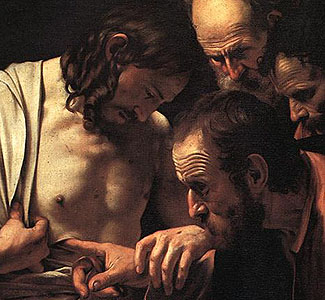
Thomas Examines Jesus' Wound

Thomas believed because he saw Jesus after the resurrection with his own eyes, and had the opportunity to examine the wound in Jesus' side.  Thomas acted on his faith by carrying the word about the resurrection of Jesus all the way to India. 

Jn 20:26 --Eight days later, his disciples were inside again, and Thomas was with them. Although the doors were locked, Jesus came and stood among them and said, “Peace be with you.” 27 Then he said to Thomas, “Put your finger here, and see my hands; and put out your hand, and place it in my side. Do not disbelieve, but believe.” 28 Thomas answered him, “My Lord and my God!” 29 Jesus said to him, “Have you believed because you have seen me? Blessed are those who have not seen and yet have believed.”

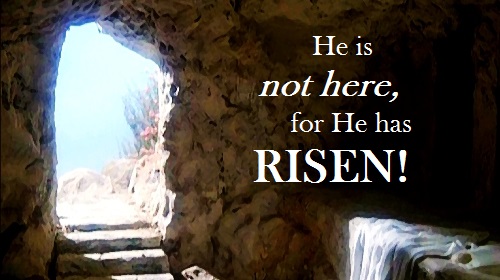
I believe in Jesus because I have examined the evidence of the resurrection of Jesus, and concluded that Jesus did raise from the grave on the third day, and that this proves that Jesus is the Son of God. 

My favorite account of the death, burial, and resurrection of Jesus was written by John, the Apostle to whom Jesus committed the care of His mother. This scene at the cross touches my heart, as I consider the love of a mother for her son, and Jesus' love of his mother.

Jn 19:23 --When the soldiers had crucified Jesus, they took his garments and divided them into four parts, one part for each soldier; also his tunic. But the tunic was seamless, woven in one piece from top to bottom, 24 so they said to one another, “Let us not tear it, but cast lots for it to see whose it shall be.” This was to fulfill the Scripture which says,

“They divided my garments among them,
and for my clothing they cast lots.”

So the soldiers did these things, 25 but standing by the cross of Jesus were his mother and his mother's sister, Mary the wife of Clopas, and Mary Magdalene. 26 When Jesus saw his mother and the disciple whom he loved standing nearby, he said to his mother, “Woman, behold, your son!” 27 Then he said to the disciple, “Behold, your mother!” And from that hour the disciple took her to his own home.
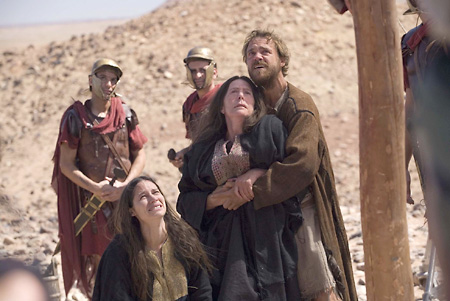


John, Mary and Mary at the Cross

Yes, I believe in Jesus because of the evidence. And the most powerful evidence is the historical evidence of the resurrection, including the actions of men like Thomas and Paul who carried the message of the resurrection to difficult places in difficult circumstances. They devoted their lives to spreading this message, and they died in the process. They followed the marching orders of Jesus.

The Great Commission

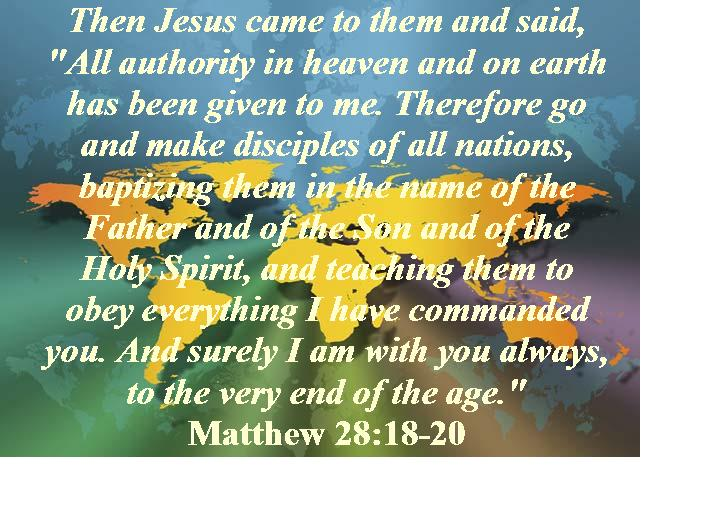
Matt 18:16 Now the eleven disciples went to Galilee, to the mountain to which Jesus had directed them. 17 And when they saw him they worshiped him, but some doubted. 18 And Jesus came and said to them, “All authority in heaven and on earth has been given to me. 19 Go therefore and make disciples of all nations, baptizing them in the name of the Father and of the Son and of the Holy Spirit, 20 teaching them to observe all that I have commanded you. And behold, I am with you always, to the end of the age.”

Yes, I believe in Jesus. And because I believe, I love and obey Him. When I was 12 years old, my faith moved me to announce my belief that Jesus is the Son of God, and having repented of my sins, I was immersed in the cold water of Little Crow Creek. 

I can talk for days and weeks about how Jesus has blessed and grown my faith.  In the beginning I was just a child, vulnerable to the assaults of Satan, but Jesus never left me alone. Three years later my mother died, and I could not understand how it could have happened. How could Jesus have allowed my blessed mother, valiant warrior of the faith, to die like that? But He stayed by my side and got me through that valley. Through good times and bad times, He never failed to provide what is needed for eternal life. 

Many times I have ventured forth not knowing what was ahead, but always trusting that God would provide. And He always provides what is His will. He keeps His promises. He never fails. 

Do you believe in Jesus?  



Acts 8:35 Then Philip opened his mouth, and beginning with this Scripture he told him the good news about Jesus. 36 And as they were going along the road they came to some water, and the eunuch said, “See, here is water! What prevents me from being baptized?” 38 And he commanded the chariot to stop, and they both went down into the water, Philip and the eunuch, and he baptized him. 39 And when they came up out of the water, the Spirit of the Lord carried Philip away, and the eunuch saw him no more, and went on his way rejoicing.


https://www.youtube.com/watch?v=P1OZZOfSX08

https://www.youtube.com/watch?v=vsSb8Rtzuh0

Friday, January 9, 2015

Because He Lives


https://www.youtube.com/watch?v=qF6aBDS3drA

Ps 18:46
The Lord lives, and blessed be my rock,
and exalted be the God of my salvation—

I serve a risen Savior.  The resurrection of Jesus is a fact of history, evidenced by the dedicated lives of those who saw it, wrote about it, and died for it. My favorite is Thomas, who refused to believe until he saw Jesus in person. Thomas carried the gospel all the way to India.  http://en.wikipedia.org/wiki/Mar_Thoma_Syrian_Church

I am blessed to be friends with a descendant of the original believers in India who were taught by Apostle Thomas. The following story is taken from his blog. He told me this story personally, it is interesting history of the Christians in India. The author of this is ABHILASH PAULOSE CHALAKUZHY

http://abhilashchalakuzhy.blogspot.com/

The year was 52 AD and the place was a small village in the northern part of Kerala named Palayur. Those days Palayur was a traditional bastion of conservative Hindus. A small group of Jews lived nearby in a hilly place and they had a synagogue there.One morning four Brahmin Hindu priests were conducting their ritualistic sun worship in the temple pond. They were from the four well known families of the area, Kadappu, Kalikavu (Kaliyankal), Shankuthiri, and Pakalomittom. They were standing half immersed in water and sprinkling water upwards chanting Vedic mantras to the sun god. Suddenly a Jewish ascetic came and stopped near where they were worshiping.

He was a visitor to the nearby synagogue and came from Jerusalem recently. The local Jews accompanied him. The visitor asked though his interpreter, what was going on. After getting their explanation he commented that it seemed the sun god was not accepting their offering, because the water fell back to the pond when they threw it up as an offering. The Hindu priests asked what could happen differently. Then the visiting Jewish holy man told them that he could throw the water as a supplication to the living God who is the creator of sun and all the other celestial stars, and his God would accept it. As the priests gave permission, he got down to the pond and worshiped God in the name of Father, Son, and Holy Spirit, and then threw the water up in to the air, and to all present it seemed the water drops remained suspended in the air. The visitor explained to the Hindu priests that he was Thomas, one of the Disciples of Christ. He further told them that Jesus was the incarnation of God, the father. The convinced priests accepted baptism from the hands of the Apostle.

My grandfather had told me that our family is the direct descendants of the second Brahmin priest in the above story, the Kalikavu.There are thousands of other Christian families in Kerala claiming to be the descendants of each of these four Brahmins. According to this tradition, Christianity came to Kerala before it reached Europe or even Rome. In the 4th century, these families moved to another village, 200 miles south of Palayur to a village called Kuravilagad. St. Thomas had ordained some priests from these families. In the following years due to lack of scriptural books and the absence of connection to an Apostolic See, these groups of Christians went through a difficult period. In 354 AD, a bishop Mar Joseph and 72 other Christian families under the leadership of a merchant named Thomas of Cana emigrated to Kerala from Mesopotamia and Jerusalem.

Thomas of Cana (where Jesus turned water into wine) was said to be a blood relative of Jesus. This immigration was a great revitalization for the local Christians. These 72 families were Jewish Christians, and their descendants to this day live in Kerala. They keep a separate identity from all other communities in Kerala. They are known as Kanaya Christians and are fiercely ethnic and practice endogamy.  Christians of Kerala converted by St. Thomas accepted the Syriac (Aramaic) liturgy from this newly arrived group and apostolic benediction from the Patriarch of Antioch.

Hence, the St. Thomas Christians of Kerala are also known as Syrian Christians of Kerala. Syriac- Aramaic was the language spoken at the time of Jesus Christ in Palestineand it was also the lingua franca for communication among many nations of the East. Even today Syrian Christians use this language in parts of their liturgy.In ancient manuscripts the Christian community in Kerala is sometimes referred to as Nazaranis, meaning the followers of Jesus who was from Nazareth. Foreign travelers have also called them, Malabar Christians, as the coastal region of Kerala is called Malabar. Malankara is another name for the coast.

How reliable is St. Thomas tradition, and the story of conversion of my ancestors? The tradition is that the apostle first landed in Kodungalore on the west coast of Kerala in 52 AD. His first followers were some of the local Jews and then a few of the indigenous people. He traveled south establishing 7 churches in Kerala. He continued his missionary journey to Malacca and China. He returned to India and was martyred in 72 A.D in Madras where his tomb still remains. Many historians think that the ancient Jews of Kerala were the descendants of Jews taken in captivity by King Nebuchadnezzar of Babylon.

Later when Cyrus, the king of Persia conquered Babylon he released the Jews, and some of them came to Kerala in 585 BC. There is enough evidence of a large Jewish colony in Kerala in the 1st century AD and there existed a continuous flow of trade between the Middle East and Kerala making the journey of the Apostle possible. Some of the early Christian converts of Kerala were probably from this Jewish community.The visit of St. Thomas to India is mentioned by many early church historians and also in the apocryphal book ' Acts of St. Thomas ' written by the Syrian Bardisan. (152-220 AD). Pantaenus, the governor of the school of faithful of Alexandria visited these Christians in 185 AD and left some references in his writings. Also, the presence of the Kanaya Christian community whose records indicate that their ancestors met St. Thomas Christians when they came to Kerala's shores in 345 AD is another strong evidence. In 552 AD, Cosmas Indicopleustus visited Kerala's coast and wrote about the presence of a Christian community there. In 1292, the famous Venetian traveler Marco Polo made the following interesting observation after a visit to the St. Thomas tomb in Madras.
"The Christians come here on pilgrimages from many places and gather some of the soil from this place where the Saint was killed, and this soil they take away with them to their countries. Now, if anyone falls ill of a certain ague, or any other fever of any kind, they give him a portion made of this soil. As soon as the sick man drinks it, he is well again." 

Marco Polo further attests that he himself took some of this soil to Venice and cured many people. (Travels of Marco Polo by L.F. Benedetto translated by Aldo Ricci). Though this treatment is not available at present at the St. Thomas' tomb, it is a revered center of pilgrimage and still annually attracts thousands from all around the world. 

In the same year 1292, the Italian missionary priest John of Monte Corvino, who was a special representative of Pope Nicholas IV visited Kerala Christians on his way to China and stayed with them for 6 months. He writes that he was quite surprised because these Christians had never heard about the Pope. Their allegiance was to the church of Persia and Antioch. Two ancient inscribed copper plates in the possession of Kerala Christians and another copy of a copper plate kept in Cambridge museum in England are further proof of the antiquity of this community.

Let me continue the story of my ancestors. converted by St. Thomas in the Palayur village, and later moved to the village of Kuravilagad in the 4th century. In Kuravilagad, they built a church with the assistance from the local ruler in 350 AD. Bishop Joseph who came with the Kana immigrants in 345 AD consecrated this church dedicated to St. Mary. My Christian ancestors lived in Kuravilagad and the surrounding areas for another millennium as farmers, merchants, and professionals, and they were well-respected members of the society. (It is about them, Gibbon wrote in his ' Decline and fall of Roman Empire '
"In arms, in arts, and possibly in virtue, they excelled the natives of Hindustan. Their husbandmen cultivated the palm trees, the merchants were enriched by pepper trade, and their soldiers preceded the other nobles of Malabar."

In 1498, when Portuguese merchants under the leadership of the great explorer Vasco Da Gamma came to Kerala, they were happy to see an indigenous group of Christians. But they soon realized that though these people were Christians, they were different from the Portuguese Christians. Portuguese were western Christians of the Latin rite who followed Pope of Rome.This was the period of inquisition in the Catholic Church and the Portuguese were very intolerant to other rites. Many local Christians became unhappy the way the Portuguese treated them, and many moved to the southern parts of Kerala, to be away from them. Kuravilagad was under the Northern kingdom, which was a protectorate of the Portuguese. The Portuguese bishop of Goa, Dom Menezes, came to Kerala in 1599 and from June 20- 24, he called for a meeting of the Kerala Christians. 153 local priests and 660 lay representatives attended these meetings and they were forced to accept the supremacy of the Latin Church.

This is the infamous Synod of Diapore in the church history. Syrian Christians were forced to accept the hegemony of the Roman Church with the threat from the Portuguese soldiers and the power of the local king. Menezes visited many Kerala churches and burned much of the valuable ancient prayer books and other manuscripts because he considered them heresies. But as Portuguese were soon defeated by the Dutch in the Kerala coast, the local Christians who were waiting for an opportunity, revolted against the Portuguese and the Latin domination of their church. The immediate provocation was when the Portuguese arrested a Syrian bishop Ahatulla from the holy land on his way to Kerala and took him to Goa as a prisoner. Somehow a rumor spread that the Portuguese drowned their bishop in the sea. On Friday, January 3, 1653, nearly 20,000 local Christians assembled in Mattachery, a port city near Cochin. They tied a long rope around a stone cross and touching the rope in a large human chain they took an oath that they or their children would never accept Portuguese or Latin hegemony over their church. This event is known in history as the Oath of Coonan Cross (leaning cross.) The people unanimously elected their Archdeacon Thomas of the Pakalomittom family as their bishop.

Later he was ordained by the visiting Mar Gregoriose, the bishop of Jerusalem under the Syrian (Jacobite) Patriarch of Antioch. At that time there were about 200,000 Christians in Kerala, and only 400 sided with the Portuguese. Soon Rome reviewed the situation more closely and started a conciliatory approach towards Syrian Christians. The Pope decreed that those who wanted could continue to practice the Syrian rite and liturgy. The Pope also sent an Italian bishop to Kerala and ordained a cousin of Arch Deacon Thomas from the Pakalomittom family as the first native Catholic bishop of Kerala. His name was Parampil Chandy Metran, or Bishop Alexander DeCampo, as western historians refer to him. This caused a large number of rebelling Kerala Syrian Christians to return to the Roman Catholic Church.

So for the first time there were two divisions within the Syrian Christians of Kerala, one group following Rome, the Syro-Malabar Catholic Church and the other following the Jacobite Syrian Orthodox Patriarch of Antioch. There were several confrontations between these two groups at that time. In one of those episodes in 1666 when a Portuguese bishop tried to enter the Kuravalagad Church, it unfortunately turned violent. The local ruler supported the Roman Catholic faction. The members of the original 4 Christian families were divided between these two factions. The faction that was rebelling against the papal group left Kuravilagad and moved further south to the southern kingdom, the Thekencore.


Thomas alias Oommen was my ancestor on the paternal side who lived 10 generations before me. He lived during this most turbulent period in the history of our community in Kerala. He strongly objected the Portuguese hegemony and the Latinisation of the Indian Church and he participated in Coonan Cross Oath of 1653. When the majority in his parish church, its vicar, and many of his relatives took pro- Papal position, Oommen Thomas was not prepared to compromise on his principles. If he had taken a position supporting the Portuguese and the Latin missionaries as many of his family members did, he could have avoided many of the financial and physical dangers.

He even dared to take a position against the powerful local king. Finally when he found that he couldn't be true to the faith and traditions of his fathers if he obliged to the Portuguese power, he left Kuravilagad with a brother and a sister and came to Changanacherry, a town in central Kerala. It was only a distance of 60 miles, but this short distance of travel changed the destiny for his descendants. In Chaganachery, Oommen lived in a house near the present municipal court given to him by the Raja of Theckencore. Oommen's brother became a priest and served the church in Chaganachery. At that time the churches in Chaganachery and Allepey Thathanpalli were branch churches (kurushupally) of Niranam church. Later these two churches joined Roman Catholicism. Oommen had two sons, Kuruvilla and Mathen. The second son, Mathen moved to Thiruvella and became the founding father of the Chalakuzhy family. He later died in a smallpox epidemic.

Mr Abhilash Paulose Chalakuzhy grandson of Late C P Ninan the nephew of Chalakuzhy Paulose Mathen and His Grace the Most Rev Dr Abraham Mar Thoma Metropolitan which has its roots at Chalakuzhy Madom in Thiruvalla town in Kerala.


Born Again to a Living Hope

1 Pet 1:3 Blessed be the God and Father of our Lord Jesus Christ! According to his great mercy, he has caused us to be born again to a living hope through the resurrection of Jesus Christ from the dead, 4 to an inheritance that is imperishable, undefiled, and unfading, kept in heaven for you, 5 who by God's power are being guarded through faith for a salvation ready to be revealed in the last time.

Friday, January 2, 2015

All in All


A Picture of the Universe


All is a very big idea; a small word with a big reality. All means the whole thing. All means without reserve, give it all you've got! All means complete.

Jesus said “All authority in heaven and on earth has been given to me. 19 Go therefore and make disciples of all nations, baptizing them in the name of the Father and of the Son and of the Holy Spirit, 20 teaching them to observe all that I have commanded you. And behold, I am with you always, to the end of the age.”

Since we do not understand the completeness of God's all, we struggle with the bad things that exist all around us.  If Jesus has all authority, why do evil things exist?  Why does Jesus allow ISIS to kill innocent women and children, and to cut off the heads of their prisoners and show it on Youtube?

When we look at the story of how things are, in the Bible, we learn that God intended for all people to have the opportunity to rebel against Him, and opportunity to be saved by Him. He put two trees in the middle of the Garden of Eden, the Tree of Life, and the Tree of the Knowledge of Good and Evil.  Mankind was given the opportunity to choose life or death, and we all choose death, just like Eve.

Apostle Paul writes that God made His creation subject to futility,
"18 For I consider that the sufferings of this present time are not worth comparing with the glory that is to be revealed to us. 19 For the creation waits with eager longing for the revealing of the sons of God. 20 For the creation was subjected to futility, not willingly, but because of him who subjected it, in hope 21 that the creation itself will be set free from its bondage to corruption and obtain the freedom of the glory of the children of God. 22 For we know that the whole creation has been groaning together in the pains of childbirth until now.23 And not only the creation, but we ourselves, who have the firstfruits of the Spirit, groan inwardly as we wait eagerly for adoption as sons, the redemption of our bodies. 24 For in this hope we were saved. Now hope that is seen is not hope. For who hopes for what he sees? 25 But if we hope for what we do not see, we wait for it with patience."

Yes, that is how He made us.  Subject to futility, created with the capacity for rebellion, creatures with free will. And we choose death and destruction because of our selfish will, our infinite curiosity, our raging passions, our failure to give our all to our Creator. 

But God has a plan from the beginning to give life to all who will give their all to Him. Yes, Jesus gave His all so that we who believe in Him can have life.  Jesus has the authority over death. He will raise all who believe in Him and give them glorified bodies on the last day.  Then He will return all authority to the Father, so that God may be all in all. 1 Cor 15:20 "But in fact Christ has been raised from the dead, the firstfruits of those who have fallen asleep. 21 For as by a man came death, by a man has come also the resurrection of the dead. 22 For as in Adam all die, so also in Christ shall all be made alive. 23 But each in his own order: Christ the firstfruits, then at his coming those who belong to Christ. 24 Then comes the end, when he deliversthe kingdom to God the Father after destroying every rule and every authority and power. 25 For he must reign until he has put all his enemies under his feet. 26 The last enemy to be destroyed is death. 27 For “God has put all things in subjection under his feet.” But when it says, “all things are put in subjection,” it is plain that he is excepted who put all things in subjection under him. 28 When all things are subjected to him, then the Son himself will also be subjected to him who put all things in subjection under him, that God may be all in all."

The authority of Jesus works through His word and through His people, and by the Spirit. Evil exists because we have not all committed our all in service to Him. But all who trust in Him have the hope of eternal life, and the glorification of our bodies. 

42 So is it with the resurrection of the dead. What is sown is perishable; what is raised is imperishable. 43 It is sown in dishonor; it is raised in glory. It is sown in weakness; it is raised in power. 44 It is sown a natural body; it is raised a spiritual body. If there is a natural body, there is also a spiritual body. 45 Thus it is written, “The first man Adam became a living being”; the last Adam became a life-giving spirit. 46 But it is not the spiritual that is first but the natural, and then the spiritual. 47 The first man was from the earth, a man of dust; the second man is from heaven. 48 As was the man of dust, so also are those who are of the dust, and as is the man of heaven, so also are those who are of heaven. 49 Just as we have borne the image of the man of dust, we shall also bear the image of the man of heaven.

50 I tell you this, brothers: flesh and blood cannot inherit the kingdom of God, nor does the perishable inherit the imperishable. 51 Behold! I tell you a mystery. We shall not all sleep, but we shall all be changed, 52 in a moment, in the twinkling of an eye, at the last trumpet. For the trumpet will sound, and the dead will be raised imperishable, and we shall be changed. 53 For this perishable body must put on the imperishable, and this mortal body must put on immortality. 54 When the perishable puts on the imperishable, and the mortal puts on immortality, then shall come to pass the saying that is written:

“Death is swallowed up in victory.”
55 “O death, where is your victory?
O death, where is your sting?”

56 The sting of death is sin, and the power of sin is the law. 57 But thanks be to God, who gives us the victory through our Lord Jesus Christ.


I Surrender All

Thursday, October 30, 2014

singing praises to God


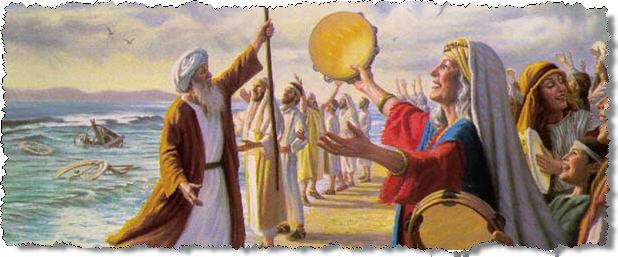
Ex 15:20 Then Miriam the prophetess, the sister of Aaron, took a tambourine in her hand, and all the women went out after her with tambourines and dancing. 21 And Miriam sang to them: “Sing to the Lord, for he has triumphed gloriously; the horse and his rider he has thrown into the sea.”


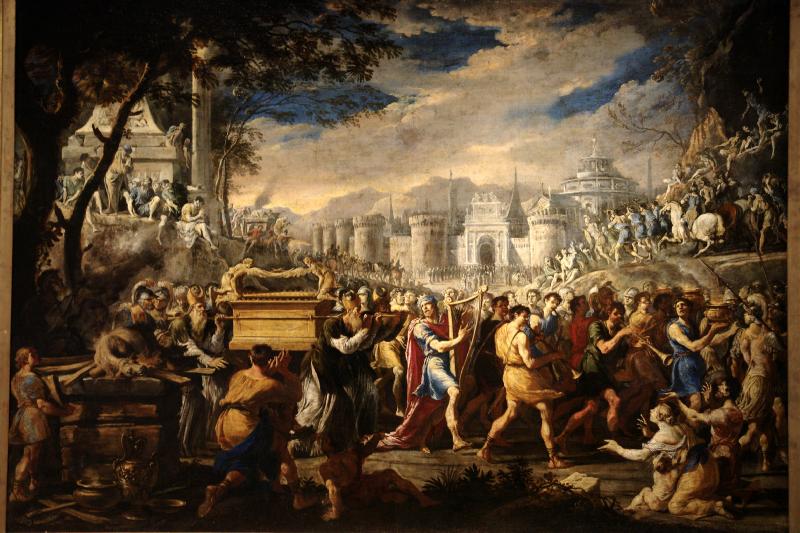
The Ark Brought to the Temple


2Chron 5:2 --Then Solomon assembled the elders of Israel and all the heads of the tribes, the leaders of the fathers' houses of the people of Israel, in Jerusalem, to bring up the ark of the covenant of the Lord out of the city of David, which is Zion. 3 And all the men of Israel assembled before the king at the feast that is in the seventh month. 4 And all the elders of Israel came, and the Levites took up the ark. 5 And they brought up the ark, the tent of meeting, and all the holy vessels that were in the tent; the Levitical priests brought them up. 6 And King Solomon and all the congregation of Israel, who had assembled before him, were before the ark, sacrificing so many sheep and oxen that they could not be counted or numbered. 7 Then the priests brought the ark of the covenant of the Lord to its place, in the inner sanctuary of the house, in the Most Holy Place, underneath the wings of the cherubim. 8 The cherubim spread out their wings over the place of the ark, so that the cherubim made a covering above the ark and its poles. 9 And the poles were so long that the ends of the poles were seen from the Holy Place before the inner sanctuary, but they could not be seen from outside. And they are there to this day. 10 There was nothing in the ark except the two tablets that Moses put there at Horeb, where the Lord made a covenant with the people of Israel, when they came out of Egypt. 11 And when the priests came out of the Holy Place (for all the priests who were present had consecrated themselves, without regard to their divisions, 12 and all the Levitical singers, Asaph, Heman, and Jeduthun, their sons and kinsmen, arrayed in fine linen, with cymbals, harps, and lyres, stood east of the altar with 120 priests who were trumpeters; 13 and it was the duty of the trumpeters and singers to make themselves heard in unison in praise and thanksgiving to the Lord), and when the song was raised, with trumpets and cymbals and other musical instruments, in praise to the Lord,

“For he is good, for his steadfast love endures forever,”

the house, the house of the Lord, was filled with a cloud, 14 so that the priests could not stand to minister because of the cloud, for the glory of the Lord filled the house of God.


Hezekiah Restores Temple Worship

2 Ch 29:20 Then Hezekiah the king rose early and gathered the officials of the city and went up to the house of the Lord. 21 And they brought seven bulls, seven rams, seven lambs, and seven male goats for a sin offering for the kingdom and for the sanctuary and for Judah. And he commanded the priests, the sons of Aaron, to offer them on the altar of the Lord. 22 So they slaughtered the bulls, and the priests received the blood and threw it against the altar. And they slaughtered the rams, and their blood was thrown against the altar. And they slaughtered the lambs, and their blood was thrown against the altar.23 Then the goats for the sin offering were brought to the king and the assembly, and they laid their hands on them, 24 and the priests slaughtered them and made a sin offering with their blood on the altar, to make atonement for all Israel. For the king commanded that the burnt offering and the sin offering should be made for all Israel.

25 And he stationed the Levites in the house of the Lord with cymbals, harps, and lyres, according to the commandment of David and of Gad the king's seer and of Nathan the prophet, for the commandment was from the Lord through his prophets.26 The Levites stood with the instruments of David, and the priests with the trumpets. 27 Then Hezekiah commanded that the burnt offering be offered on the altar. And when the burnt offering began, the song to the Lord began also, and the trumpets, accompanied by the instruments of David king of Israel. 28 The whole assembly worshiped, and the singers sang, and the trumpeters sounded. All this continued until the burnt offering was finished. 29 When the offering was finished, the king and all who were present with him bowed themselves and worshiped. 30 And Hezekiah the king and the officials commanded the Levites to sing praises to the Lord with the words of David and of Asaph the seer. And they sang praises with gladness, and they bowed down and worshiped.


Trumpets and Cymbals at the Dedication of the Rebuilt Temple

Ezra 3:10 And when the builders laid the foundation of the temple of the Lord, the priests in their vestments came forward with trumpets, and the Levites, the sons of Asaph, with cymbals, to praise the Lord, according to the directions of David king of Israel. 11 And they sang responsively, praising and giving thanks to the Lord,

“For he is good, for his steadfast love endures forever toward Israel.”


Hung their instruments in the willows by the river in Babylon

Psalm 137 English Standard Version (ESV)

How Shall We Sing the Lord's Song?

137 By the waters of Babylon,

there we sat down and wept,

when we remembered Zion.

2 On the willows there

we hung up our lyres.

3 For there our captors

required of us songs,

and our tormentors, mirth, saying,

“Sing us one of the songs of Zion!”

4 How shall we sing the Lord's song

in a foreign land?

5 If I forget you, O Jerusalem,

let my right hand forget its skill!

6 Let my tongue stick to the roof of my mouth,

if I do not remember you,

if I do not set Jerusalem

above my highest joy!

Probably music in the first century among first believers came directly from the non-instrumental practice of the Jewish Synagogue. It was natural for the disciples of Jesus to continue their musical traditions. Paul’s admonition to sing psalms, hymns, and spiritual songs within the context of the book of Psalms raises some questions, as many of the Psalms call for instrumental accompaniment. However, the non-instrument practice of singing continued for many years in both the Jewish Synagogue and in the community of disciples of Jesus.

The later introduction of polyphony and instrumental accompaniment caused discord in the community of believers. Today polyphony is taken for granted, even though it was not practiced by the early believers. However, instrumental accompaniment is still debated.

I am pleased to know that acapella music is becoming very popular today. Please visit this site to download a selection of music.


Zion in Jerusalem is representative of the Heavenly Zion, the city whose builder and maker is God. Abraham was looking for that city. The writer of Hebrews says that we (in the kingdom) have come to the heavenly Zion.


Hebrews 12:18 For you have not come to what could be touched, to a blazing fire, to darkness, gloom, and storm, 19 to the blast of a trumpet, and the sound of words. (Those who heard it begged that not another word be spoken to them, 20 for they could not bear what was commanded: And if even an animal touches the mountain, it must be stoned! 21 The appearance was so terrifying that Moses said, I am terrified and trembling.) 22 Instead, you have come to Mount Zion, to the city of the living God (the heavenly Jerusalem), to myriads of angels in festive gathering, 23 to the assembly of the firstborn whose names have been written[j] in heaven, to God who is the Judge of all, to the spirits of righteous people made perfect, 24 to Jesus (mediator of a new covenant), and to the sprinkled blood, which says better things than the blood of Abel.


Since we have come to Mt. Zion, can we take down the harps from the willow trees and praise God?  Or do we need to wait for the resurrection?


Revelation 15 Holman Christian Standard Bible (HCSB)
Preparation for the Bowl Judgments

15 Then I saw another great and awe-inspiring sign in heaven: seven angels with the seven last plagues, for with them, God’s wrath will be completed. 2 I also saw something like a sea of glass mixed with fire, and those who had won the victory over the beast, his image, and the number of his name, were standing on the sea of glass with harps from God. 3 They sang the song of God’s servant Moses and the song of the Lamb:

Great and awe-inspiring are Your works,

Lord God, the Almighty;

righteous and true are Your ways,

King of the Nations.

4 Lord, who will not fear

and glorify Your name?

Because You alone are holy,

for all the nations will come

and worship before You

because Your righteous acts

have been revealed.

Church music has a history of controversy. Obviously our practice of music for the assembly today is different from what was practiced by first century believers. Do we need laws about church music, or do we have freedom to praise God from the heart according to our various traditions, as approved by the leadership of the local assembly?


Sacred Harp Singing, Ider, AL


https://www.ministrymagazine.org/archive/1948/09/controversy-over-protestant-church-music

Wednesday, October 15, 2014

Things Authorized by Jesus


The Son of Man Is Given Dominion

Daniel 7
13 “I saw in the night visions, and behold, with the clouds of heaven there came one like a son of man,and he came to the Ancient of Days and was presented before him.
14 And to him was given dominion and glory and a kingdom,
that all peoples, nations, and languages should serve him;
his dominion is an everlasting dominion, which shall not pass away,
and his kingdom one that shall not be destroyed.


Obey Everything I Have Commanded You

John 4:23
But the hour is coming, and is now here, when the true worshipers will worship the Father in spirit and truth, for the Father is seeking such people to worship him.

John 4:24
God is spirit, and those who worship him must worship in spirit and truth.”

John 14:17
even the Spirit of truth, whom the world cannot receive, because it neither sees him nor knows him. You know him, for he dwells with you and will be in you.

John 16:13
When the Spirit of truth comes, he will guide you into all the truth, for he will not speak on his own authority, but whatever he hears he will speak, and he will declare to you the things that are to come.

1 Corinthians 2:13
And we impart this in words not taught by human wisdom but taught by the Spirit, interpreting spiritual truths to those who are spiritual.

Ephesians 1:13
In him you also, when you heard the word of truth, the gospel of your salvation, and believed in him, were sealed with the promised Holy Spirit,

Worshiping God in spirit and truth involves doing the things taught by the Holy Spirit, the words of Jesus and the Apostles. We read the book of Acts to see the things done by the teaching and authority of the Apostles. That history gives us insight into how we should do things in our lives today. What we do in the assembly of believers is an important part of our worship in spirit and truth, but truly worship is not limited or confined to the assembly. How we live and think each day, how we interact with people, how we demonstrate concern for the needs of others, is the quality of our worship that is seen by the world. 

Jesus authorized loving each other,  John 13:34-35 --
"A new commandment I give to you, that you love one another: just as I have loved you, you also are to love one another. By this all people will know that you are my disciples, if you have love for one another.”

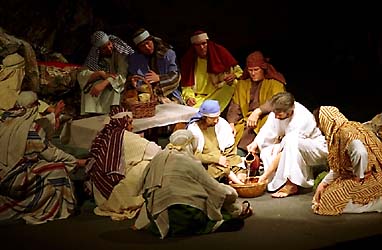
Jesus had just washed the disciples feet. He said his disciples should do likewise.

97110608.jpg (382×250)

Jesus authorized humble service

John 13:12 When he had washed their feet and put on his outer garments and resumed his place, he said to them, “Do you understand what I have done to you? 13 You call me Teacher and Lord, and you are right, for so I am. 14 If I then, your Lord and Teacher, have washed your feet, you also ought to wash one another's feet. 15 For I have given you an example, that you also should do just as I have done to you. 16 Truly, truly, I say to you, a servant is not greater than his master, nor is a messenger greater than the one who sent him. 17 If you know these things, blessed are you if you do them.

Foot washing was commanded by Jesus. We often explain that this lesson in service can be demonstrated in other ways that are pleasing to Jesus, and most of us do not wash anyone's feet.  For service to match what is involved in foot washing, we must take a servant position, humble ourselves as a servant, and serve others. 

Service that exalts us cannot be compared to foot washing. We all enjoy giving service that puts us in a good light, but do we seek service that humbles us, and makes us look like a slave?  Perhaps the present Ebola epidemic has given more opportunity for this kind of service than anything in recent memory. We should pray each day for those who are putting themselves in danger in order to save others. When people give such service because of their love for God and fellow man, they are honoring Jesus.

Jesus authorized putting God first


Matt 11:28,  "Come to me, all who labor and are heavy laden, and I will give you rest. 29 Take my yoke upon you, and learn from me, for I am gentle and lowly in heart, and you will find rest for your souls. 30 For my yoke is easy, and my burden is light.”

Love God with all your being

Deuteronomy 6:4-6 (ESV)
4 “Hear, O Israel: The Lord our God, the Lord is one. 5 You shall love the Lord your God with all your heart and with all your soul and with all your might. 6 And these words that I command you today shall be on your heart.


Love Your Neighbor as Yourself

Leviticus 19:33-34 (ESV)
33 “When a stranger sojourns with you in your land, you shall not do him wrong. 34 You shall treat the stranger who sojourns with you as the native among you, and you shall love him as yourself, for you were strangers in the land of Egypt: I am the Lord your God."

Matt 22:36 “Teacher, which is the great commandment in the Law?” 37 And he said to him, “You shall love the Lord your God with all your heart and with all your soul and with all your mind. 38 This is the great and first commandment. 39 And a second is like it: You shall love your neighbor as yourself. 40 On these two commandments depend all the Law and the Prophets.”

The love must be genuine

They (Early Christians) Had Everything in Common  Acts 4:32

32 Now the full number of those who believed were of one heart and soul, and no one said that any of the things that belonged to him was his own, but they had everything in common. 33 And with great power the apostles were giving their testimony to the resurrection of the Lord Jesus, and great grace was upon them all.34 There was not a needy person among them, for as many as were owners of lands or houses sold them and brought the proceeds of what was sold 35 and laid it at the apostles' feet, and it was distributed to each as any had need. 36 Thus Joseph, who was also called by the apostles Barnabas (which means son of encouragement), a Levite, a native of Cyprus, 37 sold a field that belonged to him and brought the money and laid it at the apostles' feet.


Fake love is deadly

Ananias and Sapphira

Acts 5:1 But a man named Ananias, with his wife Sapphira, sold a piece of property, 2 and with his wife's knowledge he kept back for himself some of the proceeds and brought only a part of it and laid it at the apostles' feet. 3 But Peter said, “Ananias, why has Satan filled your heart to lie to the Holy Spirit and to keep back for yourself part of the proceeds of the land? 4 While it remained unsold, did it not remain your own? And after it was sold, was it not at your disposal? Why is it that you have contrived this deed in your heart? You have not lied to man but to God.” 5 When Ananias heard these words, he fell down and breathed his last. And great fear came upon all who heard of it. 6 The young men rose and wrapped him up and carried him out and buried him.

7 After an interval of about three hours his wife came in, not knowing what had happened. 8 And Peter said to her, “Tell me whether you sold the land for so much.” And she said, “Yes, for so much.” 9 But Peter said to her, “How is it that you have agreed together to test the Spirit of the Lord? Behold, the feet of those who have buried your husband are at the door, and they will carry you out.” 10 Immediately she fell down at his feet and breathed her last. When the young men came in they found her dead, and they carried her out and buried her beside her husband. 11 And great fear came upon the whole church and upon all who heard of these things.


Jesus authorized all things that lead to life and godliness

2 Peter 1:2-4(ESV)
2 May grace and peace be multiplied to you in the knowledge of God and of Jesus our Lord.

Confirm Your Calling and Election

3 His divine power has granted to us all things that pertain to life and godliness, through the knowledge of him who called us to his own glory and excellence, 4 by which he has granted to us his precious and very great promises, so that through them you may become partakers of the divine nature, having escaped from the corruption that is in the world because of sinful desire.


Jesus freed us from the law of sin and death

2 Corinthians 3:5-7 (ESV)

5 Not that we are sufficient in ourselves to claim anything as coming from us, but our sufficiency is from God, 6 who has made us sufficient to be ministers of a new covenant, not of the letter but of the Spirit. For the letter kills, but the Spirit gives life.


Binding laws about physical things does not produce righteousness

Col 2:6 Therefore, as you received Christ Jesus the Lord, so walk in him, 7 rooted and built up in him and established in the faith, just as you were taught, abounding in thanksgiving.

8 See to it that no one takes you captive by philosophy and empty deceit, according to human tradition, according to the elemental spirits of the world, and not according to Christ. 9 For in him the whole fullness of deity dwells bodily, 10 and you have been filled in him, who is the head of all rule and authority. 11 In him also you were circumcised with a circumcision made without hands, by putting off the body of the flesh, by the circumcision of Christ, 12 having been buried with him in baptism, in which you were also raised with him through faith in the powerful working of God, who raised him from the dead. 13 And you, who were dead in your trespasses and the uncircumcision of your flesh, God made alive together with him, having forgiven us all our trespasses, 14 by canceling the record of debt that stood against us with its legal demands. This he set aside, nailing it to the cross. 15 He disarmed the rulers and authorities and put them to open shame, by triumphing over them in him.


Let No One Disqualify You


16 Therefore let no one pass judgment on you in questions of food and drink, or with regard to a festival or a new moon or a Sabbath. 17 These are a shadow of the things to come, but the substance belongs to Christ. 18 Let no one disqualify you, insisting on asceticism and worship of angels, going on in detail about visions, puffed up without reason by his sensuous mind, 19 and not holding fast to the Head, from whom the whole body, nourished and knit together through its joints and ligaments, grows with a growth that is from God.

20 If with Christ you died to the elemental spirits of the world, why, as if you were still alive in the world, do you submit to regulations— 21 “Do not handle, Do not taste, Do not touch” 22 (referring to things that all perish as they are used)—according to human precepts and teachings? 23 These have indeed an appearance of wisdom in promoting self-made religion and asceticism and severity to the body, but they are of no value in stopping the indulgence of the flesh.

Yes, we are children of God through faith in Jesus Christ, and He loves His family. He wants us to do well, and to find the joy and peace that is in Him. 

Yes, there is a blessing in giving, a blessing in service. Blessed are all who trust in Him.

Tuesday, June 3, 2014

What the Bible Teaches about Marriage, Divorce, and Remarriage


Marriage is a central theme of the Bible. God began marriage with Adam and Eve in the Garden of Eden. God’s law for marriage is that a man and woman be joined by a vow of loyalty so long as both partners are alive.

Under the Law of Moses, many rules and regulations about marriage were part of the Law. Marriage of near kin was forbidden, and Moses gave permission for divorce that was not part of God’s will for marriage from the beginning. The Law decreed that sexual immorality be punished by stoning to death, but because of the hardness of the hearts of Israel, Moses permitted them to write a bill of divorce and put their wives away because of sexual immorality. The person put away, divorced because of sexual immorality, was permitted to marry again, but not permitted to return to their first husband after being married to someone else.

The way that God dealt with marriage issues under the Law of Moses teaches us something about God’s will for marriage. God made provision for man’s failures. He often forgave marriage sins and used weak people to accomplish His purposes. God never overlooks sin, and always requires an accounting for sin, but by His love has paid the account in full through Jesus Christ for all who believe in Him. We should expect God’s grace and mercy to extend to penitent past violators of God’s marriage law today, just as He has always extended His grace and mercy to those who love and serve Him.

Traditional teaching on marriage, divorce, and remarriage concludes that God does not recognize or count marriages made against His will as being marriages in fact. Therefore it is concluded that people who married against the will of God are not really married, but living in adultery.

A study of all the Bible teaches about marriage will convince us that the traditional "living in adultery" understanding of what Jesus taught in Mat 19 is not supported by the general teaching of the Bible. What Jesus said in Mat 19 agrees with the Law and the Prophets. Jesus did not give a new marriage law. Jesus taught about the existing marriage law that was given in the beginning when Adam and Eve were joined as husband and wife in the presence of God.

God’s will for marriage is that one man be married to one woman for as long as they both live. God wants that relationship to be unselfish, with each person concerned for the needs of the other person. They are to be one flesh, and to leave father and mother and cleave to each other.

God commanded that mankind should not destroy this blessed relationship. The fact that God forbade man to destroy marriage surely implies that man can destroy marriage. The Bible is full of stories of how men and women sinned regarding God’s marriage law. Because of the hardness of the hearts of Israel, in that they did not want to obey God’s marriage law, Moses permitted them to divorce their wives because of sexual immorality, and to give them a bill of divorce so that they could go and marry someone else, Deut 24:1-4. This was not God’s will from the beginning, because He wanted men and women to be faithful to each other as husband and wife until one partner died.

Yet God described as divorce His putting away, because of idolatry, of the ten northern tribes of Israel, Jer 3:8. This shows clearly that the sin of unfaithfulness justifies divorce. Divorce was not God’s plan from the beginning, but some sins justify divorce in some circumstances.

Jesus said to Israelites living under the Law of Moses that the only way a man could, without sin, divorce his wife and remarry (without the sin of adultery) was if the wife was guilty of sexual immorality, Mat 19:9. This one exclusion given to God’s covenant people living under the Law of Moses does not necessarily apply to all people and all situations. When we study the Bible carefully, we find that Ezra commanded Israelites who were married to foreign wives to get rid of those wives, Ezra 10:10-11. Paul showed that in a mixed marriage between believer and unbeliever, if the unbelieving partner departed, there is no requirement to continue the marriage relationship, 1 Cor 7:12-16. Paul indicated that Jesus did not speak about this situation of marriage of a believer to an unbeliever, 1 Cor 7:12-13. Thus we conclude that the context of Jesus’ instruction in Mat 19:9 is to a believer married to a believer, 1 Cor 7:10-11.

We know that the Israelites were not responsible for enforcing God’s marriage law on the people of other nations. Paul taught that Christians are not responsible for policing the morals of the unbelievers, 1 Cor 5:9-13. But when we study Mat 19:9 in light of what Paul said in 1 Cor 7:10-11, it becomes clear that the church is responsible for enforcing God’s marriage law within the church. Willful sin is very dangerous. When people plan to sin, knowing that it is against God’s will, it will be extremely difficult for them to ever repent, Heb 10:26-31. Divorce and remarriage between Christians cannot take place without sin: either the sin of unfaithfulness against the marriage by sexual immorality, or the sin of unjust divorce and remarriage against the will of God, which is called adultery.

Four wrong assumptions lead to misunderstanding how we must respond to violations of God’s marriage law.

1. That a marriage is only a real marriage if it is approved of God, and that a man cannot divorce his wife against the will of God.

The bible is full of history of marriages made against the will of God that were recognized by God as marriages in fact. Every marriage of more than one wife was against God's will, but God recognized those marriages. Men and women marry when they agree to live together as husband and wife. They can marry according to God's will or against his will, but it is a marriage either way.

Jesus said, "What God has joined together, let not man put asunder." God does not command against that which cannot be done. When Jesus said, "let not man put asunder," it implies that man can put asunder. Man can and does divorce and marry against the will of God.

2. That in the context of Mat 19, adultery can only mean having sexual intercourse with someone not your wife or with someone else's wife.

The scriptures show clearly that adultery has another meaning of unfaithfulness or apostasy. The way a word is used in context always determines the meaning intended. Modern meanings of English words cannot be used as authority for the original meaning of the word in Hebrew or Greek (the modern English meaning of baptism includes sprinkling of infants).

The Old Testament word translated adultery meant having sex with the wife of another man.

The New Testament word translated adultery refers to (male) paramour as the root meaning.
NT:3432
moichos (moy-khos'); perhaps a primary word; a (male) paramour; figuratively, apostate:

NT:3431
moicheuo (moy-khyoo'-o); from NT:3432; to commit adultery:
(Biblesoft's New Exhaustive Strong's Numbers and Concordance with Expanded Greek-Hebrew Dictionary. Copyright (c) 1994, Biblesoft and International Bible Translators, Inc.)

Both words have apostasy as one of the meanings. Jesus said that a man who lusts for a woman has committed adultery in his mind. A mind that forsakes faithfulness and longs to be connected with another is described by Jesus as committing adultery, Mt 5:28. How can we conclude that adultery can only mean having sexual intercourse with the wife or husband of another person?

In Mat 19 the context forces us to see that unjust divorce and remarriage equals adultery. The sin of apostasy against the wife and against God's will is clearly indicated. When we put all the emphasis on the physical act of sexual intercourse, we miss recognizing what is the real sin under consideration. Jesus did not say that a man who married a woman against the will of God continues to live in adultery so long as he is married to that woman. There is no place in the Bible where we can find the phrase "living in adultery." We should be able to describe things taught in the Bible with the same language the Holy Spirit used to teach the thing.

3. That Jesus taught the New Testament law on marriage and divorce in Mat 19, and that it is different from the marriage law of the Law of Moses.

While the penalty for violating marriage law was different under the Law of Moses and in the new covenant, the marriage law itself was unchanged, as Jesus clearly showed when he went back to Adam and Eve in the garden to explain how the marriage law has always been.

Jesus in Mat 19 was answering a question pertaining to marriage under the Law of Moses. He said nothing to indicate that he was talking only about the future circumstance in his kingdom, but He answered a question that was highly debated in the two rabbinical schools of His time. The school of Shammai held that divorce was only permissible for the cause of sexual immorality. The school of Hillel held that a man could divorce his wife if she fell into disfavor for any reason. The Pharisees were trying to cause problems for Jesus by getting him to speak on an issue that was bound to offend some of the audience. Jesus went back to the beginning and showed what God's will for marriage has always been.

Nothing Jesus said in Mat 19 differs in any way from what the Law of Moses taught about marriage. When Jesus said that from the beginning it was not God's will for divorce to take place, that does not mean that divorce is not called for in some circumstances. God divorced Israel (ten northern tribes) because of spiritual adultery. Jer 3:8 - "I gave faithless Israel her certificate of divorce and sent her away because of all her adulteries." NIV

4. That Jesus was teaching that there is no just cause for divorce other than sexual immorality, and that the guilty party does not have the right to marry after being divorced for sexual immorality.

Deut 24:1-4 directly refutes the idea that the guilty party in a divorce because of sexual immorality is not permitted to marry. Jesus said nothing about the right of the guilty party to remarry, but Deut 24:1-4 shows that the guilty party was permitted to remarry.

Also, there was and is another reason for ending a marriage relationship allowed in special circumstances; that of a believer married to an unbeliever who is unwilling to live peacefully. Ezra demanded that Israel send away their pagan wives who were involved in trying to prevent the restoration of Jerusalem and the temple worship. There is no record that men who sent out their foreign wives were forbidden to marry again.

Paul states clearly that a wife is not bound to an unbelieving husband if he chooses to leave her. Jesus did not address this issue at all in Mat 19, as Paul shows with these words in 1 Cor 7:12: "To the rest I say this (I, not the Lord)." NIV

The Bible does not teach that the person guilty of violating God’s marriage law by unjust divorce and remarriage must again divorce in order to repent, and then remain unmarried. The person divorced for the cause of sexual immorality was permitted to remarry, according to Deut 24:1-4. Nowhere in the scripture is the person divorced for just cause commanded not to marry. If the person divorced for just cause was permitted to remarry, why should we think that the person unjustly divorced would not have the right to marry once the preserving of the first marriage is no longer possible? When a Christian refuses to honor God’s marriage law by being faithful to their marriage partner, they may well be classed as an unbeliever. Those who refuse to honor and obey Jesus are not truly believers. See 1 Cor. Chapter 5, 2 Cor. 6:15, and 1 Tim 5:8. A Christian is not bound to continue a marriage where the partner is an unbeliever and unwilling to live with him or her. The scriptures teach that a former Christian who rebels against God and returns to slavery to the world is an unbeliever, 2 Pet 2:20-22

How Can One Repent Of Unlawful Divorce And Remarriage?

The problem in understanding about marriage, divorce, and remarriage is not with what God wants; it is about how violation of God’s marriage law can be repented and forgiven. The Bible does not teach that a subsequent marriage (after unlawful divorce) must be destroyed in order for repentance to take place. Some teach that the first marriage is still in effect, but Jeremiah said that returning to the partner of the first marriage after divorce and remarriage would pollute the land, Jer 3:1. Restoration of the first marriage after divorce was specifically forbidden by the Law of Moses, Deut 24:1-4.  Therefore restoration of the destroyed marriage is not a requirement of repentance. Repentance requires godly sorrow that produces a change of heart, a heart that desires to please God in all things, including remaining faithful to our legal wife at the time of our repentance.

God does recognize marriage vows that are made against His will. God’s approval is not needed for a marriage to be a marriage in fact. Men and women can marry according to the will of God, or against the will of God, and it is still a marriage. The marriage of Israel to four wives is testimony to this fact.

When one repents of past sins, he/she comes to God as one is, in whatever legal relationships are present, and determines to live faithful to Jesus including keeping lawful vows. True repentance will require that one does not again commit sin against a marriage partner, and against God.

It seems strange that some, under the law of the spirit of life in Jesus Christ, seem to have more harsh attitudes about sin and repentance than God demonstrated under the Law of Moses, the Law of Sin and Death. Perhaps the harsh attitudes result from thinking that we must be justified by keeping rules, and therefore all the emphasis is on keeping what are believed to be commandments. Often the commandments being enforced are actually opinions derived by human logic. We would do better to trust the righteousness that is in Jesus Christ, and endeavor to please Him in all things.

Conclusion

Harsh and unbiblical positions on divorce and remarriage have poisoned relationships between Christians. There are many among us who disfellowship those who do not agree with their unbiblical arguments that are handed-down traditional doctrine. What the Bible teaches about marriage in the Old Testament was written for our instruction, and we should learn from it. The Law of Moses was holy, righteous, and good. We should not refuse the lessons taught by the tutor who was bringing us to Christ.

We must avoid using unbiblical study methods in our approach to study of the Bible. Who believes what, or how smart or well educated the teacher, is not the source of Bible authority. The basic teaching of Scripture, considering everything the Bible has to say on the subject, is Bible authority. Many highly educated men have promoted false ideas and divided the church ever since the first century. Logical arguments based on wrong assumptions lead to false conclusions. The qualified student of the scriptures will depend on a broad and general understanding of a Bible topic as revealed in the complete teaching of the Holy Scriptures. Truth has nothing to fear from examination.


Isaac Meeting Rebecca

Friday, May 2, 2014

Jesus' Personal Spirit


Jesus, being a man, had both a human body and a personal spirit, in addition to the Holy Spirit within him. Jesus’ human body was conceived by the Holy Spirit within the womb of Mary, and Jesus is thus the Son of God by conception. Mary was a descendant of David, and Jesus is also called the son of man and the son of David, his inheritance from his mother. The fact that Jesus was tempted just as we are shows that he had a spirit that belonged uniquely to Jesus, separate from the Holy Spirit, since the scriptures teach that God is not tempted by evil. 

As we follow the gospel story, we are led to conclude that Jesus, son of man and Son of God, had a personal spirit that was formed at the time of his conception by the power of God. When Jesus died on the cross, that spirit went to the place of the spirits of the dead. Then that spirit was rejoined with the body of Jesus at the time of His resurrection, and later that human body and spirit were glorified and ascended into Heaven where Jesus reigns as Lord of Lords and King of Kings in his eternal glory which he had in the beginning as the Word of God.

Jesus sometimes struggled with the submission of his spirit to the Spirit of God within him. Many times Jesus referred to his humanity, and the scriptures reveal clearly that the man Jesus had a personal spirit that communicated with the Father and that interacted with the Holy Spirit. When Jesus prayed, he prayed to his Father, and struggled with his humanity.

Luke 22:41-45

He knelt down and prayed, saying, "Father, if it is Your will, take this cup away from Me; nevertheless not My will, but Yours, be done." Then an angel appeared to Him from heaven, strengthening Him. And being in agony, He prayed more earnestly. Then His sweat became like great drops of blood falling down to the ground.

The Scriptures teach clearly that the personal spirit of Jesus left his body at the time of his death on the cross.

Matt 27:50

And Jesus cried out again with a loud voice, and yielded up His spirit.

Luke 23:46

And when Jesus had cried out with a loud voice, He said, "Father, 'into Your hands I commit My spirit.' " Having said this, He breathed His last.

John 19:29-30

So when Jesus had received the sour wine, He said, "It is finished!" And bowing His head, He gave up His spirit.

Jesus’ spirit separated from his dead body and went to Hades at the time of his death on the cross. This is supported by the record, and by the sign of Jonah promised by Jesus. There has been much discussion about how the burial of Jesus fits the sign of Jonah, three days and three nights in the heart of the earth. When we realize that the heart of the earth is referring to Hades, we understand that the spirit of Jesus went to Hades at three PM on Thursday afternoon, just before the three hours of daylight that followed the three hours of darkness while Jesus died on the cross. When we count those three hours as one day, the spirit of Jesus was in Hades for three days and three nights. The Thursday crucifixion date suggests Jesus’ death in AD 30 when the Holy Sabbath of the Feast of Unleavened Bread fell on Friday, making the Sabbath reference, the burial of Jesus before evening of the High Sabbath, apply to Friday of the crucifixion week.

Luke 23:54-56

That day was the Preparation, and the Sabbath drew near. And the women who had come with Him from Galilee followed after, and they observed the tomb and how His body was laid. Then they returned and prepared spices and fragrant oils. And they rested on the Sabbath according to the commandment.

When Jesus died on the cross, his personal spirit, made alive by the Power of God, went to the lower parts of the earth. There are several scriptures that teach the fact of the visit of Jesus’ spirit to Hades during the time of His death.

Matt 12:40

For as Jonah was three days and three nights in the belly of the great fish, so will the Son of Man be three days and three nights in the heart of the earth.

Acts 2:26-28

Moreover my flesh also will rest in hope. For You will not leave my soul in Hades, Nor will You allow Your Holy One to see corruption. You have made known to me the ways of life; You will make me full of joy in Your presence.'

Eph 4:7-10

But to each one of us grace was given according to the measure of Christ's gift. Therefore He says:

"When He ascended on high, He led captivity captive, And gave gifts to men."

(Now this, "He ascended"--what does it mean but that He also first descended into the lower parts of the earth? He who descended is also the One who ascended far above all the heavens, that He might fill all things.)


1 Peter 3:18-19

For Christ also suffered once for sins, the just for the unjust, that He might bring us to God, being put to death in the flesh but made alive by the Spirit, 19 by whom also He went and preached to the spirits in prison,

Since the Bible is fundamentally a message about God’s plan for redeeming his people, students of the Scriptures need to look at each part of the Bible in comparison to the total message about salvation through faith in Jesus Christ. Being faithful to this framework of revelation will help readers to reach correct conclusions as they examine Bible truth. .

The Bible teaches truth by the student’s examination of Bible facts to make reasonable conclusions intended by the context of the message. The Holy Spirit gives an illustration of Paul making a deduction from what is written. The inference is contained in parentheses.

Eph 4: 7-10.

“ But to each one of us grace was given according to the measure of Christ's gift. Therefore He says: ‘When He ascended on high, He led captivity captive, And gave gifts to men.’ (Now this, ‘He ascended’--what does it mean but that He also first descended into the lower parts of the earth? He who descended is also the One who ascended far above all the heavens, that He might fill all things.)”

Paul says the fact that Jesus ascended on high implies that Jesus first descended to the lower parts of the earth. To learn what lower parts of the earth means in this context, one should study all that the Bible has to say on the topic. The scriptures reveal that “lower parts of the earth” is used to describe the place of departed spirits, called Sheol in the Old Testament, and Hades in the New Testament. Following are a few scriptures that use lower parts of the earth to refer to the place of spirits of the dead.

Psalms 63:9

But those who seek my life, to destroy it, Shall go into the lower parts of the earth.

Ezekiel 32:24

"There is Elam and all her multitude, All around her grave, All of them slain, fallen by the sword, Who have gone down uncircumcised to the lower parts of the earth, Who caused their terror in the land of the living; Now they bear their shame with those who go down to the Pit.

Ephesians 4:9

(Now this, "He ascended"--what does it mean but that He also first descended into the lower parts of the earth?

What is the problem related to Jesus’ spirit going to Hades? The scriptures teach that people are held accountable for the deeds done in the flesh, and that all will face judgment in the condition in which they die. Thus there would be no second chance for the spirits of the dead. This is the general rule and it covers all people this side of the cross. There is no second chance for those who reject the gospel in this life. The following scriptures teach that mankind will be judged for the things done in this life.

Heb 9:24-28

For Christ has not entered the holy places made with hands, which are copies of the true, but into heaven itself, now to appear in the presence of God for us; not that He should offer Himself often, as the high priest enters the Most Holy Place every year with blood of another-- He then would have had to suffer often since the foundation of the world; but now, once at the end of the ages, He has appeared to put away sin by the sacrifice of Himself. And as it is appointed for men to die once, but after this the judgment, so Christ was offered once to bear the sins of many. To those who eagerly wait for Him He will appear a second time, apart from sin, for salvation.

2 Cor 5:10

For we must all appear before the judgment seat of Christ, that each one may receive the things done in the body, according to what he has done, whether good or bad.

Rev 20:11-15

Then I saw a great white throne and Him who sat on it, from whose face the earth and the heaven fled away. And there was found no place for them. And I saw the dead, small and great, standing before God, and books were opened. And another book was opened, which is the Book of Life. And the dead were judged according to their works, by the things which were written in the books. The sea gave up the dead who were in it, and Death and Hades delivered up the dead who were in them. And they were judged, each one according to his works. Then Death and Hades were cast into the lake of fire. This is the second death. And anyone not found written in the Book of Life was cast into the lake of fire.

Beginning with the preaching of the gospel on the day of Pentecost, salvation is through faith in Jesus Christ by obeying the gospel and trusting Jesus in our lives. Before his death on the cross, Jesus forgave the sins of people according to his desire. Those who lived before the establishment of the new covenant were saved by faith in the message of God. We wonder about how the blood of Jesus reached and saved the ones who died before the cross. They could not be saved by animal sacrifices.

Heb 10:3-21

But in those sacrifices there is a reminder of sins every year. For it is not possible that the blood of bulls and goats could take away sins.

Therefore, when He came into the world, He said: "Sacrifice and offering You did not desire, But a body You have prepared for Me. In burnt offerings and sacrifices for sin You had no pleasure. Then I said, 'Behold, I have come--In the volume of the book it is written of Me--To do Your will, O God.' "

Previously saying, "Sacrifice and offering, burnt offerings, and offerings for sin You did not desire, nor had pleasure in them" (which are offered according to the law), then He said, "Behold, I have come to do Your will, O God." He takes away the first that He may establish the second. By that will we have been sanctified through the offering of the body of Jesus Christ once for all.

And every priest stands ministering daily and offering repeatedly the same sacrifices, which can never take away sins. But this Man, after He had offered one sacrifice for sins forever, sat down at the right hand of God, from that time waiting till His enemies are made His footstool. For by one offering He has perfected forever those who are being sanctified. But the Holy Spirit also witnesses to us; for after He had said before, "This is the covenant that I will make with them after those days, says the LORD: I will put My laws into their hearts, and in their minds I will write them," then He adds, "Their sins and their lawless deeds I will remember no more."

Now where there is remission of these, there is no longer an offering for sin. Therefore, brethren, having boldness to enter the Holiest by the blood of Jesus, by a new and living way which He consecrated for us, through the veil, that is, His flesh.


It was necessary that the blood of Christ be given for the redemption of all those who will be saved. We struggle to understand how the blood of Jesus reached back to those who died before the Gospel age. Perhaps their salvation was also through faith in Jesus? When Jesus’ human spirit visited Hades, every spirit there may have had the opportunity to hear Him. But why would they believe Him? We can assume those spirits had no additional evidence other that what they had been taught by God’s Prophets during their lives on earth, and the message of Jesus. In the account of the rich man and Lazarus, Abraham says that those who refuse to believe the Prophets would not even believe if one were to rise from the dead. We can understand that a man’s spirit coming down to Hades would have no basis for producing faith in the spirits there other than what they previously believed of the message of God through the prophets. Their faith would be based on evidence.

Luke 16:27-31

27 Then he said, 'I beg you therefore, father, that you would send him to my father's house, 28 for I have five brothers, that he may testify to them, lest they also come to this place of torment.' 29 Abraham said to him, 'They have Moses and the prophets; let them hear them.' 30 And he said, 'No, father Abraham; but if one goes to them from the dead, they will repent.' 31 But he said to him, 'If they do not hear Moses and the prophets, neither will they be persuaded though one rise from the dead.' "

The evidence of the prophet Isaiah is that the spirits of the dead are not respectful of all those who come down to the pit. Isaiah gives a picture of how the King of Babylon would be welcomed into Sheol. While this language is highly figurative, it does covey the idea that the spirits of the dead interact with spirits who come down to the pit. The spirits of the dead have understanding in the place where they abide.

Isa 14:9-17

"Hell from beneath is excited about you, To meet you at your coming; It stirs up the dead for you, All the chief ones of the earth; It has raised up from their thrones All the kings of the nations. They all shall speak and say to you: 'Have you also become as weak as we? Have you become like us? Your pomp is brought down to Sheol, And the sound of your stringed instruments; The maggot is spread under you, And worms cover you.' "How you are fallen from heaven, O Lucifer, son of the morning! How you are cut down to the ground, You who weakened the nations! For you have said in your heart: 'I will ascend into heaven, I will exalt my throne above the stars of God; I will also sit on the mount of the congregation On the farthest sides of the north; I will ascend above the heights of the clouds, I will be like the Most High.' Yet you shall be brought down to Sheol, To the lowest depths of the Pit. "Those who see you will gaze at you, And consider you, saying: 'Is this the man who made the earth tremble, Who shook kingdoms, Who made the world as a wilderness And destroyed its cities, Who did not open the house of his prisoners?'”


When Jesus’ spirit went down into Hades, what kind of welcome did his spirit receive? We can imagine the mocking of the unbelievers, as they welcomed Jesus’ spirit to the realm of the dead. However, there was one group of spirits there who had good reason to believe the message of God. The spirits of those who died in the flood must have realized the truth of God’s message through Noah as they were drowning. Unfortunately for them, it was too late for them to be saved physically. They died in the days of Noah buried in water because of their sins. Did God give them a chance to live by faith in Jesus Christ? That is God’s business, and not our place to decide. But we should have open minds to the evidence he has given us in the scriptures.

Jesus taught about the place of departed spirits in the story of the rich man and Lazarus. Some say that this is a parable, and not an actual story, but it makes no difference so far as the information about the spirit realm is concerned. Whether it is a true story or a parable, it contains the truth about spirits. Jesus always used illustrations based on principles of truth, and never used any illustration based on false information. Since we can establish that Jesus’ human spirit went to Hades following his death on the cross, and since Abraham and the spirit of the rich communicated in Hades, it seems reasonable that Jesus would have something to say in Hades. The great gulf that separated the wicked spirits from those in Abraham’s bosom did not hinder Abraham and the rich man from talking, therefore it would not hinder Jesus from speaking to any or all of the spirits in prison at the time of his visit.

Luke 16:19-31

"There was a certain rich man who was clothed in purple and fine linen and fared sumptuously every day. But there was a certain beggar named Lazarus, full of sores, who was laid at his gate, desiring to be fed with the crumbs which fell from the rich man's table. Moreover the dogs came and licked his sores. So it was that the beggar died, and was carried by the angels to Abraham's bosom. The rich man also died and was buried. And being in torments in Hades, he lifted up his eyes and saw Abraham afar off, and Lazarus in his bosom. Then he cried and said, 'Father Abraham, have mercy on me, and send Lazarus that he may dip the tip of his finger in water and cool my tongue; for I am tormented in this flame.' But Abraham said, 'Son, remember that in your lifetime you received your good things, and likewise Lazarus evil things; but now he is comforted and you are tormented. And besides all this, between us and you there is a great gulf fixed, so that those who want to pass from here to you cannot, nor can those from there pass to us.' Then he said, 'I beg you therefore, father, that you would send him to my father's house, for I have five brothers, that he may testify to them, lest they also come to this place of torment.' Abraham said to him, 'They have Moses and the prophets; let them hear them.' And he said, 'No, father Abraham; but if one goes to them from the dead, they will repent.' But he said to him, 'If they do not hear Moses and the prophets, neither will they be persuaded though one rise from the dead.' "


What did Jesus do while dead in the body but alive in the spirit? Peter wrote that Jesus preached the gospel to the spirits in Hades. Specifically, Peter says that the gospel was preached to the spirits of the disobedient people who were killed in the flood in the days of Noah. He says that the gospel was preached even to the dead, so that they might live according to God in the spirit.

1 Peter 3:18-20,

“For Christ also suffered once for sins, the just for the unjust, that He might bring us to God, being put to death in the flesh but made alive by the Spirit, by whom also He went and preached to the spirits in prison, who formerly were disobedient, when once the Divine longsuffering waited in the days of Noah, while the ark was being prepared, in which a few, that is, eight souls, were saved through water.

1 Peter 4:5-6,

“They will give an account to Him who is ready to judge the living and the dead. For this reason the gospel was preached also to those who are dead, that they might be judged according to men in the flesh, but live according to God in the spirit.”

What would Jesus have said to the spirits in Hades? He likely would have told them about who He is, what had happened to him, and what he was going to do. The spirits would have no way to verify that Jesus’ spirit had the power to leave Hades. Their only basis for faith would have been their belief of the Prophets and the words of Jesus. For those who perished in the flood, the remembrance of Noah and his construction of the ark, and the demonstration of the power of God in destroying the earth with water, may have given them a strong movement toward faith. Those people do fit a type of baptism. They were covered with water because of their sins, and thus died to sin. Their time on earth was ended by the decree of God, and they were buried in the flood. Thus their hearing the gospel in Hades and believing in Jesus could have given them the opportunity to be raised with Jesus. We do not have to understand such things. If God saw fit to give them a chance for salvation based on faith in Jesus Christ, in Hades, that is God’s business, and we should have no objection. It only applies to the circumstances then existing, and has no application this side of the cross. Jesus’ visit to Hades gives absolutely no support to the Roman Catholic doctrine of Purgatory, or to the fantastic fables told by the Gnostic heretics.

However, the action of Jesus in Hades may reveal how the spirits of the Old Testament saints were saved by the blood of Christ. Following his death on the cross, Jesus in his personal spirit visited them in Hades, and led the spirits of the faithful from Hades to heaven, where they are pictured with Christ.

Heb 12:22-24, -

“But you have come to Mount Zion and to the city of the living God, the heavenly Jerusalem, to an innumerable company of angels, to the general assembly and church of the firstborn who are registered in heaven, to God the Judge of all, to the spirits of just men made perfect, to Jesus the Mediator of the new covenant, and to the blood of sprinkling that speaks better things than that of Abel.”

The possibility of the spirit of man going into heaven is confirmed by the words of Paul. The third heaven is understood to be the dwelling place of God.

2 Cor 12:2-4

I know a man in Christ who fourteen years ago--whether in the body I do not know, or whether out of the body I do not know, God knows--such a one was caught up to the third heaven. And I know such a man--whether in the body or out of the body I do not know, God knows--how he was caught up into Paradise and heard inexpressible words, which it is not lawful for a man to utter.
While we may have difficulty answering questions raised by the fact of Jesus’ spirit visiting Hades, more problems result from denying the plain teaching of the scriptures. Jesus, being fully human as well as fully divine, had a spirit that belonged to him as a man, which we may consider separate from the Holy Spirit within him. This spirit of the man Jesus communicated with God, struggled in submitting to the will of God, was tempted in all points like we are, and yet without sin. If Jesus did not have the capacity to sin, then this entire story line falls short. God is not tempted. God cannot sin. God cannot die. Thus we are forced to examine the humanity of Jesus essentially separate from His divine nature, and then we understand his words on the cross, “Father! Father! Why have you forsaken me?” The human body of Jesus died on the cross, separated from the Father by our sins, and his personal spirit, made alive by the Spirit of God, visited Hades, preached the gospel there, ascended on high in the resurrected and glorified body of Jesus, and led captive a host of captives. This host of captives are those spirits who had been separated from God by sin, and were now cleansed by faith in the blood of Jesus and allowed to follow Jesus into the presence of God.

We should study the Bible by putting facts along side each other and following the story line that is presented in the scriptures as we seek understanding. Important Bible doctrines are taught in themes that can be followed through the Holy Scriptures, and be understood in their proper context. We need to examine all of our treasure of traditional doctrines of the church, and throw away those that are contrived to win arguments without being true to the simple teaching of the Holy Spirit contained in the scriptures. The Bible is best understood when we approach its teaching with a mind clear of prejudice, and open our heart to the revealed message. Our understanding and agreement is not needed to make God’s word true. His word is true, and all who are wise will submit to the simple truth revealed therein.

Our plea that the Holy Scriptures preserved in the Bible are the only basis for faith and teaching in the church sound hollow if we add contrived arguments, and proclaim them equal to clearly spoken truth. Derived arguments are subject to error, because the basic premises of the argument may be removed from the proper context, and thus become a pretext. If we stick with what is clearly taught, and use that as a basis for our faith, we will be pleasing to God and equipped for every good work, as we put into practice the things we learn. Learning is not enough, but we must live the pattern of Jesus Christ.

The facts are simple. Jesus had a personal spirit that separated from his body when he died on the cross. That spirit of Jesus visited Hades, and preached the gospel to the spirits there. The purpose for that preaching was so that they might have opportunity to live in the spirit by faith. The spirit of Jesus ascended from Hades, and led captivity captive, and gave gifts to men. That is the record. We may not understand it, but we can accept it by faith as the simple narrative of the scriptures.

Footnote: This article was begun in Katmandu, Nepal, Nov 2003, starting every morning at 5:30 AM while waiting on the cooks to wake up and start our coffee in the Marco Polo Business Hotel. We had free Internet service there, and I sent the file to my email address just before I left for home on Nov 10th. Ken Shoop and I had discussed this topic for twenty-two years without coming to an agreement. Finally I decided to put down my thoughts in organized form, and this is the result after about fifteen rewrites. Today is January 12, 2004.