Thursday, May 23, 2013

L in TULIP


Limited Atonement?
           
L stands for limited atonement.  This is a concept that the atonement provided by the blood of Christ is limited to a certain number of individuals chosen before time began.  Augustine had the idea that God was preparing a specific number of sanctified beings to replace the exact number of the fallen angels.  But children of God will be greater than the angels, and share the rule of Jesus over the angels.  1 Cor 6:2-3 - “Do you not know that the saints will judge the world? And if the world will be judged by you, are you unworthy to judge the smallest matters?  Do you not know that we shall judge angels? How much more, things that pertain to this life?” (NKJ)  

Heb 12:22-23 -“But you have come to Mount Zion and to the city of the living God, the heavenly Jerusalem, to an innumerable company of angels, to the general assembly and church of the firstborn who are registered in heaven, to God the Judge of all, to the spirits of just men made perfect.”  (NKJ)  

Rev 3:21-22 - "To him who overcomes I will grant to sit with Me on My throne, as I also overcame and sat down with My Father on His throne.  He who has an ear, let him hear what the Spirit says to the churches."  (NKJ)
           
If we are greater than the angels in sharing the reign of Christ and judging angels, then we cannot be replacements for angels.  Christians and angels are two distinctly different beings.  Christians are children of God through faith in Jesus Christ, while angels are powerful heavenly beings created by God.  God did not limit the number of the saints, but said their number would be as the sands of the seashore and the stars of the sky. 
           
But the atonement of the blood of Jesus is limited to a certain category of people, those who hear and obey the gospel.  The atonement is for everyone, but only those who want it will receive it.  So it is a matter of an unlimited atonement available to a limited assembly, those who will believe and obey the gospel of Jesus Christ.  Jesus said that only those who are born again can enter the kingdom of God.  This article about the new birth should give us a better understanding of what is involved.

BORN  AGAIN?
           
This is Monday night, October 27, 1997, and my son-in-law, Tim Taylor, just called from the hospital in Providence, RI, to say that our daughter, Amy Taylor, is spending the night in the hospital, and our granddaughter is expected to be delivered tomorrow. 
           
Birth is a time of pain and a time of rejoicing.  The process of being delivered from the mother’s womb and entering into life outside, with the revealing of the glorious nature of the infant with all it’s promise and helplessness, is a time of wonder.
           
Jesus told Nicodemus that one must be born again to see the kingdom of heaven.  Nicodemus was surprised, and asked Jesus if a man could enter the second time into his mother’s womb to be born again.  Jesus explained that unless one is born of water and the Spirit, they cannot enter the kingdom of heaven.
           
Talking of a born again Christian is redundant.  Unless one is born again, they are not a child of God.  A Christian is one who belongs to Christ, one who is a member of the body of Christ, which is God’s people.  No one can be a true child of God without being born again.
           
The apostle John talked about three witnesses (to our being sons of God) in heaven and three witnesses on earth.  In heaven, the Father, the Word, and the Holy Spirit bear witness that we are children of God.  On earth; the Spirit, the water, and the blood are witnesses.  (1 John 5:7-8)
           
Jesus connected the water and the Spirit in the new birth when He spoke to Nicodemus, (John 3:1-8) about birth by two elements, the water and the Spirit.  Then He connected the blood by talking about His crucifixion. (John3:9-16)  Also we remember that water and blood flowed from the spear wound in the side of Jesus.
           
We need to understand how the three witnesses (the Spirit, the water, and the blood) agree in their testimony that we are children of God.  Faith in the cleansing power of the blood of Jesus comes first.  Unless we believe that Jesus is the Christ, the Son of God, and that He shed His blood as a sufficient sacrifice for the sins of the world, we cannot come to God. (Heb 11:6)
           
The death, burial, and resurrection of Jesus (Rom 6:3-5) are connected with the birth of water and the Spirit; which can be shown to take place in baptism, if we are willing to understand the scriptures simply.  We are trusting both the teaching of the Holy Spirit and the Power of the Holy Spirit in our baptism, according to Paul’s teaching to the Colossian saints: “In Him you were also circumcised with the circumcision made without hands, by putting off the body of the sins of the flesh, by the circumcision of Christ, buried with Him in baptism, in which you also were raised with Him through faith in the working of God, who raised Him from the dead. (Col 2:11-12, NKJ)
           
Paul reminded the Roman Christians that they depended on the Spirit of God in them to have life, “But you are not in the flesh but in the Spirit, if indeed the Spirit of God dwells in you. Now if anyone does not have the Spirit of Christ, he is not His.”
           
“And if Christ is in you, the body is dead because of sin, but the Spirit is life because of righteousness.  But if the Spirit of Him who raised Jesus from the dead dwells in you, He who raised Christ from the dead will also give life to your mortal bodies through His Spirit who dwells in you.”  (Rom 8:9-11, NKJ)
           
When we believe in Jesus as the Son of God, and trust the power of His blood to take away our sins, then we obey His simple commands to repent of sins and be baptized in the name of Jesus for the remission of sins.  (Acts 2:38)  In baptism, the water, the Spirit, and the blood all agree that we are sons of God, that we have been born again. 

So we can see that the atonement of the blood of Christ is available to all who hear and obey the gospel.  That puts great emphasis on our responsibility to carry the gospel to all people.  This is why Jesus gave the great commission that we can read in Matthew 28:18-20, Mark 16:15-16, and Luke 24:47.  John says that the things written in the gospel are written so that we might believe, and believing have life in Jesus’ name.  (John 20:30-31)  The life of Jesus and His great faith becomes a pattern for our faith in God. It is important for us to follow the pattern of Jesus.


FOLLOWING THE PATTERN
           
Following the pattern is very important when we want to make something for which we have been given the design.  When God gives us a pattern to follow in order to please him, our salvation depends on following the design given by God. 
           
Several stories from long ago illustrate the importance of following God's pattern.  God gave Noah the plans for the ark.  Noah made the ark according to the pattern God gave him.  He made it from the material specified by God, and according to the dimensions God gave him.  The bible says "Thus Noah did; according to all that God commanded him, so he did." (Genesis 6:22, NKJ)
           
Later God gave Moses the pattern for the tabernacle and all the things within it: "And let them make Me a sanctuary, that I may dwell among them.  According to all that I show you, that is, the pattern of the tabernacle and the pattern of all its furnishings, just so you shall make it." (Exodus 25:8-9, NKJ)  Israel made all the things as God had commanded them; "As the Lord had commanded, just so they had done it. And Moses blessed them." (Exodus 30:43)
           
From these two examples we get an idea that God's people should be careful to carry out the design of God in our lives.  God often has instructed His people about what they must do in order to receive His protection, and God always keeps his promises.  But what if Noah had failed to build the ark according to God's plans?  Or what if Moses had failed to build the tabernacle according to God's plans?  We can easily agree that God would have rejected the work of Noah and Moses if they had not followed the pattern given them by God.
           
But what about us?  Has God given us a pattern by which to build our lives in a way that is acceptable to Him?  Is it important for us to follow the pattern He has given to us?
           
Jesus is the pattern that God has given to show us the way to make our lives pleasing to God.  Jesus said, "I am the way, the truth, and the life.  No one comes to the Father except through Me.  If you had known Me, you would have known My Father also; and from now on you know Him and have seen Him."  (John 14:6-7, NKJ)
           
Again Jesus said, "Unless one is born again, he cannot see the kingdom of God."----"Most assuredly, I say to you, unless one is born of water and the Spirit, he cannot enter the kingdom of God." (John 3:3&5, NKJ)  Following His resurrection, Jesus commanded his apostles: "Go into all the world and preach the gospel to every creature.  He who believes and is baptized will be saved; but he who does not believe will be condemned."  (Mark 16:15-16)
           
Later the apostle Paul spoke of the facts of the gospel to the Christians at Corinth.  "I declare to you the gospel which I preached to you, which also you received and in which you stand, by which also you are saved, if you hold fast that word which I preached to you--unless you believed in vain.  For I delivered to you first of all -------that Christ died according to the scriptures, and that He was buried, and that He rose again the third day according to the Scriptures." (1 Corinthians 15:1-4, NKJ)
           
Paul explained to the Christians at Rome how they had followed the pattern of the gospel in their baptism, Romans 6:3-7.  At verse 17 of the same chapter Paul shows that they had followed the pattern given by God for their salvation: "But God be thanked that though you were slaves of sin, yet you obeyed from the heart that form of doctrine to which you were delivered.  And having been set free from sin, you became slaves of righteousness."
           
We need to follow Jesus.  He is our pattern in faith, obedience, and righteousness.  We need to constantly look at Jesus, who is the author and finisher of our faith.  (Hebrews 12:2)
           
Since the gospel is God’s power to salvation for everyone who believes, atonement is limited only by our faith in Jesus which leads to obedience of the gospel.  Atonement is not limited by the choice of God, but by the choice of man.  Augustine’s concept of limited atonement does not agree with the concept of salvation for all who believe. Mankind has responsibility regarding his personal faith. 

LIMITED ATONEMENT?
           
Augustine had a notion that God has chosen a fixed number of people to be saved so as to replace the number of fallen angels.  Of course, saved people are children of God, different from angels, and we are promised to share the reign of Christ.  We are promised that we will judge the angels. (1 Cor 6:3)  And God has promised that His children will be a numberless host, more than can be counted.  “After these things I looked, and behold, a great multitude which no one could number, of all nations, tribes, peoples, and tongues, standing before the throne and before the Lamb, clothed with white robes, with palm branches in their hands.”  (Rev 7:9, NKJ)
           
But the concept of a limited atonement is still prevalent today, with many believing they can only be saved eternally if they just happen to be among the limited number of people God has chosen for salvation.  God has chosen a certain group of people for salvation, but the number is limited not by count but by personal choice.  God has chosen to save only those who are called by the gospel to become faithful followers of Jesus. 
           
However, some place the responsibility of responding to the gospel entirely in God’s hands.  The idea that even man’s free will has to be manipulated by God in order to respond to the gospel was promoted by Augustine and later by John Calvin.  However, there is a large body of teaching in the Bible about man’s free will.  God holds each individual accountable for the decisions we make in life.  Sin is a wrong choice against what is good and right.  We do not talk about animals sinning, because they are not like us to make choices between good and evil.  Animals do what comes naturally to them.  Sometimes humans act like animals also, but it is not acceptable behavior.  People are held accountable for their actions by society, and this is a demonstration of the principle of free will.  If we do not have the freedom to act according to our own will, then we are not held accountable.
           
Jesus paid the price for all the sins of every person who will ever live, and made salvation available to everyone.  But only those who will accept the gift will receive the reward.  God does not make that choice for us.  The invitation is extended to all who are willing:  “And the Spirit and the bride say, "Come!" And let him who hears say, ‘Come!’ And let him who thirsts come. Whoever desires, let him take the water of life freely.”  (Rev 22:17, NKJ)
           
The way in which atonement is limited is by the preaching of the gospel and by peoples response to that message.  That is why Paul said: “For since, in the wisdom of God, the world through wisdom did not know God, it pleased God through the foolishness of the message preached to save those who believe.”
           
“For Jews request a sign, and Greeks seek after wisdom; but we preach Christ crucified, to the Jews a stumbling block and to the Greeks foolishness, but to those who are called, both Jews and Greeks, Christ the power of God and the wisdom of God.”  (1 Cor 1:21-24, NKJ)
           
God has limited His atonement to those who believe the gospel enough to love and follow Jesus.  It is through the gospel being preached that all who hear are called to faith.  God does not put faith in a man’s heart, but faith comes by hearing the message of God, the gospel of Jesus Christ.  (Romans 10:17)  And that is why it is so important for us to share the story of Jesus Christ with everyone as we have opportunity.  Everyone who is willing is invited to come, and they can only come through the gospel.  It is the message of the cross that draws all men to Christ, and makes salvation possible for everyone who believes.

https://www.youtube.com/watch?v=QBahT6B3fLY


U in TULIP

Image result for corporate election in Christ


THE U IN TULIP

            U stands for unconditional election.  The idea is that God has chosen individuals for salvation from before creation, and that He has chosen all others for condemnation, based on His choice, not our choice.  There is some basis for this argument in scripture, because several statements speak of God’s foreknowledge and plans from the beginning.  The apostle Paul wrote of God’s predestination of the elect both to the Romans and to those at Ephesus. 
            Rom 8:28-33 - “And we know that all things work together for good to those who love God, to those who are the called according to His purpose.  For whom He foreknew, He also predestined to be conformed to the image of His Son, that He might be the firstborn among many brethren.  Moreover whom He predestined, these He also called; whom He called, these He also justified; and whom He justified, these He also glorified.”
            “What then shall we say to these things? If God is for us, who can be against us?  He who did not spare His own Son, but delivered Him up for us all, how shall He not with Him also freely give us all things?  Who shall bring a charge against God's elect?  It is God who justifies.”  (NKJ)
            Eph 1:3-6 - “Blessed be the God and Father of our Lord Jesus Christ, who has blessed us with every spiritual blessing in the heavenly places in Christ, just as He chose us in Him before the foundation of the world, that we should be holy and without blame before Him in love, having predestined us to adoption as sons by Jesus Christ to Himself, according to the good pleasure of His will, to the praise of the glory of His grace, by which He has made us accepted in the Beloved.  (NKJ)
            God surely planned to save those whom He intends to save, and He knows the future.  God knows who will be saved, and who will be lost.  But God gave us a role to play in the eternal outcome of our lives.  God has hope that we will come to Him and have everlasting life.  He is not willing that any should perish.  When God hopes for something, it is evident that someone else’s will is involved, because God is able to work all things according to His will.  But when He created us, He gave us free will and made us subject to sin.  God is willing for us to make the choice for life or for death.  He wants only those who make the free will choice for life as His children.  The creation was for this purpose only, for the revealing of the children of God.
            As Paul said in Rom 8:18-21 - “For I consider that the sufferings of this present time are not worthy to be compared with the glory which shall be revealed in us.  For the earnest expectation of the creation eagerly waits for the revealing of the sons of God.  For the creation was subjected to futility, not willingly, but because of Him who subjected it in hope; because the creation itself also will be delivered from the bondage of corruption into the glorious liberty of the children of God.” (NKJ)
            As we study the scriptures in their completeness, it becomes apparent that God planned to save all who believe in Jesus Christ, understanding that belief to be a free will choice of obedient faith.  Jesus extends an invitation to whoever desires to come - Rev 22:16-19 - "I, Jesus, have sent My angel to testify to you these things in the churches. I am the Root and the Offspring of David, the Bright and Morning Star."  And the Spirit and the bride say, "Come!" And let him who hears say, "Come!" And let him who thirsts come. Whoever desires, let him take the water of life freely.”
            “For I testify to everyone who hears the words of the prophecy of this book: If anyone adds to these things, God will add to him the plagues that are written in this book; and if anyone takes away from the words of the book of this prophecy, God shall take away his part from the Book of Life, from the holy city, and from the things which are written in this book.”  (NKJ)
            This article written for the NJP illustrates how we are made in the image of God, and able to come to Him for eternal life.  The most remarkable thing about Jesus was His complete devotion to doing his Father’s will.  We need to be devoted like that.

IN HIS IMAGE
            God made mankind in His own image, and gave us dominion over His creation. (Genesis 1:26-27)  He made man a living being, and gave him the tree of life so that he could live forever.  (Genesis 2:9, 3:22) 
            But Adam and Eve rejected eternal life and chose death along with the right to do their own thing.  And so death passed to mankind, because we all have sinned and chosen to rebel against God sometime in our life.  (Romans 3:23)
            So Jesus came to live a perfect life and show us what it means to be made in the image of God.  Jesus perfectly demonstrated the likeness of God in His human life.  When we look at the life of Jesus, we see the life that God wants us to live.  Jesus is our example, and He makes it possible for us to realize what God created us to be. 
            Jesus' life is remarkable in how He totally dedicated Himself to doing his Father's will.  Although He was God, He left heaven, took the form of a servant, and humbled Himself by dying the agonizing death on the cross.  (Philippians 2:5-11)  He despised the shame of the cross because of His interest in bringing mankind to eternal glory, so that we could truly be in the image of God.  (Hebrews 2:9-12, 12:2)
            Paul said that flesh and blood cannot inherit the kingdom of God.  (1 Corinthians 15:50) 
            Jesus said that a man must be born again of water and the Spirit in order to enter the Kingdom.  (John 3:3-7)
            Again Paul said Christians have a responsibility to live our lives for Jesus who died for us, no longer living for ourselves.  (2 Corinthians 5:15)
            To be Christlike means to dedicate our lives in service to God and to mankind.  If we are in Christ, we are a new creation in the image of God.  Old things have passed away and all things have become new.  ----  "For He made Him who knew no sin to be sin for us, that we might become the righteousness of God in Him."  (2 Corinthians 5:17, 21  NKJ)
            We can be like Jesus in this life by submitting our will to the will of God as Jesus did, and by accepting the salvation that is in Jesus Christ.  God calls us by His gospel, the message of Jesus Christ, to come to Him in faith and to be born again through obedience to the message of God, being made complete in Jesus.  (Colossians 2:8-13)  Jesus gives eternal life to all who obey Him.  (Hebrews 5:9)  But He will destroy those who refuse to obey the gospel.  (2 Thessalonians 1:8)  Therefore we make the choice whether to be born again into God's family and have eternal life, or to reject God and suffer eternal damnation. 
            To be in the image of God means to be in Jesus Christ, who is the exact likeness of God the Father.  (Colossians 1:15-23)  This is possible because God loved us and made us in the beginning to be His children.  Although we have rejected His love and been separated from Him by sin, He is able to cleanse us and bring us back into His glorious presence.  "For God so loved the world, that He gave His only begotten Son, that whoever believes in Him should not perish but have everlasting life."  (John 3:16, NKJ)

            Obeying the gospel is a Bible concept that the followers of TULIP seemingly never use.  Instead of saying we must obey the gospel, they say that we must confess that we are sinners and accept Christ as our personal savior by praying the sinners prayer.  But the Bible says in several places that individuals are responsible for faith and obedience.  Following is another of my articles that illustrates how we become Christians. 

OBEDIENCE
            A pillar of salt standing in the great rift valley south of the Dead Sea was all that remained of Lot's wife. She had failed to honor God and disobeyed His specific command.  She looked back to Sodom, a place so wicked that the men of the city had surrounded Lot's house earlier and demanded to have homosexual relations with his two visitors.  God destroyed Sodom and Gomorrah because of the great wickedness of their people, and Lot's wife received the reward of disobedience which is destruction. (See Genesis 19)
            Many generations before, a man named Noah was saved with his family when the world was destroyed with water.  Noah obeyed God because he believed and honored Him. 
            Noah and his family worked for 120 years while the neighbors wondered.  What was this huge thing built of gopher wood, four hundred fifty feet long, seventy five feet wide, and forty five feet high?  Noah pleaded with them to repent and believe in God, but none outside his own family listened.  They were destroyed because of unbelief.  But Noah and his family were saved by God's grace through their faith and obedience. (Genesis 6-8)
            Abraham's devotion to God was tested when God ordered Abraham to offer his son Isaac as a sacrifice.  Abraham believed in God so much that he was willing to offer his son, trusting that God could even raise Isaac from death.  Abraham's faith was counted for righteousness because he obeyed God. (James 2:14-26) 
            The bible contains many examples of the importance of obedience and how it is a required demonstration of faith in God.  While we are unable to be perfected by our obedience because of our sins, yet God requires submission of our will to Him.  He requires simple acts of obedience motivated by faith in God and acceptance of His grace in Jesus Christ.  Believers must understand these simple acts of submission to God's will and be willing to obey if they are to be justified by their faith in Jesus Christ.  These requirements are easily understood and only require our submission to the Will of God in order to be accomplished.
            Jesus promised that "Not everyone who says to Me, 'Lord, Lord,' shall enter the kingdom of heaven, but he who does the will of My Father in heaven." (Matthew 7:21, NKJ)  Jesus says that some who claim to be great miracle workers in His name will be cast out because He never knew them.  He taught that those who build on the firm foundation of faith in Jesus Christ will be saved. (Matthew 7:22-27)
            Faith in Jesus as the Son of God and obedient trust that causes us to follow the simple commands of Jesus will lead us to eternal life.  Jesus commanded repentance which involves a change of direction in our lives.  We must be willing to turn away from doing our own thing according to our own will, and be willing to follow Jesus.  Repentance is a choice of our own mind which is prompted by our faith in Jesus.  Repentance is necessary.  (See Luke 13:3,5; Acts 2:38)
            Jesus also requires a commitment from us to express our faith in Him openly before other people.  We cannot be secret Christians and be pleasing to Jesus.  Jesus said, "Therefore whoever confesses Me before men, him I will also confess before My Father who is in heaven." (Matthew 10:32)
            Baptism is also a simple command of Jesus which is a demonstration of our trust in the death of Jesus and His resurrection.  Paul explained it this way to the Roman Christians, "Or do you not know that as many of us as were baptized into Christ Jesus were baptized into His death?  Therefore we were buried with Him through baptism into death, that just  as Christ was raised from the dead by the glory of the Father, even so we should walk in newness of life." (Romans 6:3-4, NKJ)
            Having obeyed these simple commands of Jesus, we know that God adds us to the body of Christ and that we have become children of God through faith in Jesus Christ. (Acts 2:38-47)  As children of God we are commanded to follow Jesus, to love God and keep His commandments, to love each other, and to trust God for continued cleansing from sin.  (1 John 1:9) 

            Our attitude toward God will determine where we spend eternity.  Attitude is something everyone has, and it can be good or bad.  While our attitude will not save us, it is necessary to have an attitude of trusting God for salvation if we are to have hope for eternity.  An attitude of trusting Jesus and of being loyal to Him are decisions we make with our human mind.  God does not force us to change our attitude from trusting the things of this world to trusting Him, but through the example of Jesus Christ, He teaches us to have the right attitude.  The following article will give some light on the importance of obedience.

TRUSTING GOD
            Pilots adjust their airplane's flight attitude so that the plane will fly most efficiently.  Thus attitude may describe the direction in which we tilt; the way that we approach life.
            People are called pessimistic or optimistic; describing our negative or positive approach to life.  So attitude may describe our mindset; our tendency to approach problems either negatively or positively. 
            Everyone has an attitude, and many of us have attitude problems.  We need to have our approach to life adjusted so that we can travel more efficiently. 
            Cain, first born son of Adam and Eve, had an attitude problem.  He thought that he should be able to do things his own way without recognizing God's supreme power.  Because of his rebellion, he became an outcast and  the father of an evil race of people who were all destroyed in the flood. (Genesis 6)
            Saul, first king of Israel, had an attitude of doing things his own way rather than respecting the commandments of God.  First he offered sacrifices which were the responsibility of Samuel, God's anointed High Priest.  Next he chose to partially obey God's command to destroy the Amalekites. 
            Then Samuel said to Saul, "Has the Lord as great delight in burnt offerings and sacrifices, as in obeying the voice of the Lord?  Behold, to obey is better than sacrifice, and to heed than the fat of rams.  For rebellion is as the sin of witchcraft, and stubbornness is as iniquity and idolatry.  Because you have rejected the word of the Lord, He also has rejected you from being King." (1 Samuel 15:22-23)
            So David was made king in Saul's place.  David had a good attitude, and trusted God for protection and salvation all of his life.  Although David made terrible mistakes, he always repented and turned to God for deliverance. 
            David composed the words of this song: "The Lord is my rock, my fortress and my deliverer; the God of my strength, in Him I will trust, my shield and the horn of my salvation, my stronghold and my refuge; my Savior, You save me from violence.  I will call upon the Lord, who is worthy to be praised; so shall I be saved from my enemies." (2 Samuel 22:2-4, NKJ)
            We need an attitude like David, and like Jesus who trusted His Father completely.  Peter described it this way: "For what credit is it if, when you are beaten for your faults, you take it patiently?  But when you do good and suffer, if you take it patiently, this is commendable before God.  For to this you were called, because Christ also suffered for us, leaving us an example, that you should follow His steps: "Who committed no sin, nor was deceit found in His mouth"; who, when He was reviled, did not revile in return; when He suffered, He did not threaten, but committed Himself to Him who judges righteously; who Himself bore our sins in His own body on the tree, that we, having died to sins, might live for righteousness-- by whose stripes you were healed." (1 Peter 2:20-24, NKJ)
            Paul expresses a powerful attitude of trust in his letter to the Philippians:  "But what things were gain to me, these I have counted loss for Christ.  But indeed I also count all things loss for the excellence of the knowledge of Christ Jesus my Lord, for whom I have suffered the loss of all things, and count them as rubbish, that I may gain Christ and be found in Him, not having my own righteousness, which is from the law, but that which is through faith in Christ, the righteousness which is from God by faith; that I may know Him and the power of His resurrection, and the fellowship of His sufferings, being conformed to His death, if, by any means, I may attain to the resurrection from the dead."  (Chapter 3:7-11, NKJ)
            Like Paul, we need the attitude of trusting God for salvation.  God's power will never fail us, and He is able to get us through this life.

            God calls everyone to come to Him for salvation.  Jesus died for the sins of all mankind.  God loves us so much that He gave Jesus to die on the cross so that whoever desires to may believe and have life in Jesus.  Yet not everyone will be saved, because salvation is conditional upon our choice to believe or disbelieve, based on the evidence given by Jesus Christ and the Bible.  We will be talking about faith as a gift of God in a later section, but the scriptures are clear in teaching that faith is the result of evidence God has revealed about Himself, especially through the gospel of Jesus the Christ.  As Paul said to the Romans, “faith comes by hearing, and hearing by the word of God.”  The following article shows how God has chosen us through our obedience to the gospel. 

CALLED  OF  GOD?
            Recently I visited a friend I have known for fifty years, and he is now more than eighty years old.  Many times I have talked with him about following Jesus, and he told me several times that he was not ready yet. 
            Again I talked with him about Jesus, and asked if he believed that Jesus is the Son of God. 
            “I guess so,” he replied.  And then he changed the subject. 
            Later in the conversation I said that I would feel bad if he died unsaved.  “They way I see it,” he said, “it would not be your fault.”
            What about someone who sort of believes in Jesus, but is perhaps not completely convinced?  What is his hope?  The only hope he has, according to the Bible, is to believe in Jesus as the Son of God, and put his trust in Jesus for salvation.  (Hebrews 11:6)
            Paul said that faith in God comes from hearing God’s word. (Romans 10:17)  He also said that God chose the foolishness (from the human view) of preaching to save those who believe.  (1 Cor 1:18-25)
            The message to be preached and heard and believed is the gospel, the glorious message of God’s love that makes salvation available to everyone who believes in Him and is willing to follow Jesus.  Paul said he was not ashamed of the gospel of Christ, “For it is the power of God to salvation for everyone who believes.” (Rom 1:16)
            God has called everyone who is willing to come to Him in faith and be saved by the sacrificial death of Jesus Christ.  In the words of Jesus, “Come to Me, all you who labor and are heavy laden, and I will give you rest.”  (Matthew 11:28, NKJ)
            As Jesus told Nicodemus, "And as Moses lifted up the serpent in the wilderness, even so must the Son of Man be lifted up (the crucifixion, rg), that whoever believes in Him should not perish but have eternal life.”
            "For God so loved the world that He gave His only begotten Son, that whoever believes in Him should not perish but have everlasting life.  For God did not send His Son into the world to condemn the world, but that the world through Him might be saved.”
            "He who believes in Him is not condemned; but he who does not believe is condemned already, because he has not believed in the name of the only begotten Son of God.” (John 3:14-18, NKJ)
            God is calling everyone to faith and obedience through the gospel of Jesus Christ.  If you do not know the gospel, then read Matthew, Mark, Luke, and John from the Bible.  At the end of the gospel of Mark, Jesus gives the marching orders to His disciples, “Go into all the world and preach the gospel to every creature.  He who believes and is baptized will be saved, but he who does not believe will be condemned.” (Mark 16:15-16, NKJ)
            So we see that everyone is called by the gospel to have faith in Jesus as the Christ (anointed), the Son of God.  But some are not sure they believe the gospel.  And some are waiting for a sign from God to convince them they are chosen for salvation. 
            By believing in Jesus is how we are chosen, and the gospel is God calling us for salvation.  If the message of Jesus dying on the cross will not touch one’s heart and let him or her see the love of God, then that person will stand condemned before Jesus in the great day of judgment.  Jesus is coming back to judge everyone.  (Acts 17:31)
            As Paul told the Thessalonians, “---- to give you who are troubled rest with us when the Lord Jesus is revealed from heaven with His mighty angels, in flaming fire taking vengeance on those who do not know God, and on those who do not obey the gospel of our Lord Jesus Christ.
            These shall be punished with everlasting destruction from the presence of the Lord and from the glory of His power, when He comes, in that Day, to be glorified in His saints and to be admired among all those who believe, because our testimony among you was believed.” (2 Thes 1:7-10, NKJ)   (end of article)

            The Bible teaches that our calling is through a message preached, the gospel of Christ.  And it also teaches that our faith is a matter of choice, producing blessings to those who believe and curses upon those who choose not to believe.  Jesus said that we should preach the gospel to everyone, and those that believe will be saved, and those who do not believe will be condemned.  That would be strange language to use if the choice has already been determined by God in the beginning of time.  God calls us to be His children through the gospel.  It is a call that is conditional upon our faith and obedience.  This article looks at the concept.

UNCONDITIONAL ELECTION?
            Abraham was chosen by God to become father of the faithful.  Abraham’s faith was developed through years of walking with God and seeing demonstrations of God’s power.  Then God worked with Abraham until his faith became strong enough to offer his son Isaac as a sacrifice. 
            The apostle Paul was chosen by Jesus to be the apostle to the nations of Asia and Europe.  Paul’s faith was developed by the struggles he faced and by God delivering him from the stoning at Lystra.  Finally Paul could say:  “Therefore do not be ashamed of the testimony of our Lord, ----- who has saved us and called us with a holy calling, not according to our works, but according to His own purpose and grace which was given to us in Christ Jesus before time began, but has now been revealed by the appearing of our Savior Jesus Christ, who has abolished death and brought life and immortality to light :through the gospel, to which I was appointed a preacher, an apostle, and a teacher of the Gentiles.”
            “For this reason I also suffer these things; nevertheless I am not ashamed, for I know whom I have believed and am persuaded that He is able to keep what I have committed to Him until that Day.”  (2 Tim 1:8-12, NKJ)
            Paul warned Timothy to: “Hold fast the pattern of sound words which you have heard from me, in faith and love which are in Christ Jesus.” (2 Tim 1:13NKJ)  Again he wrote - “Therefore I endure all things for the sake of the elect, that they also may obtain the salvation which is in Christ Jesus with eternal glory.  This is a faithful saying: for if we died with Him, we shall also live with Him.  If we endure, we shall also reign with Him. If we deny Him, he also will deny us.  If we are faithless, he remains faithful; he cannot deny Himself.”  (2 Tim 2:10-13, NKJ)
            God is faithful, and He will keep His promises.  But he has promised salvation not only to a select few, but rather to all who come to Him through faith in Jesus Christ, and who are faithful to him when they die.  The conditions of election are faith in Jesus Christ as the Son of God, and faithfulness to Him in our lives.  God has elected to save all who believe in Jesus and are willing to follow Him. 
            God has chosen to save those who endure temptation and who love God:  “Blessed is the man who endures temptation; for when he has been approved, he will receive the crown of life which the Lord has promised to those who love Him.”  (James 1:12, NKJ)  Those who love God keep His commandments.  (1 John 5:3)
            God has chosen those who are faithful to Him at death to receive salvation.  "Do not fear any of those things which you are about to suffer. Indeed, the devil is about to throw some of you into prison, that you may be tested, and you will have tribulation ten days. Be faithful until death, and I will give you the crown of life.”   (Rev 2:10, NKJ)
            God has chosen to save those whose names are written in the Lamb’s book of life: “But there shall by no means enter it anything that defiles, or causes an abomination or a lie, but only those who are written in the Lamb's Book of Life.”   (Rev 21:27, NKJ)  But names can be blotted out of the Book of Life - “and if anyone takes away from the words of the book of this prophecy, God shall take away his part from the Book of Life, from the holy city, and from the things which are written in this book.”   (Rev 22:19, NKJ)
            Jesus brought life and immortality to light through the gospel.  The gospel is God’s power to salvation for everyone who believes.  God has promised that He will save all who come to Him through believing the gospel message and following Jesus faithfully.  It is the message of the gospel that elects us for eternal salvation when we are willing to believe it. 


T in TULIP


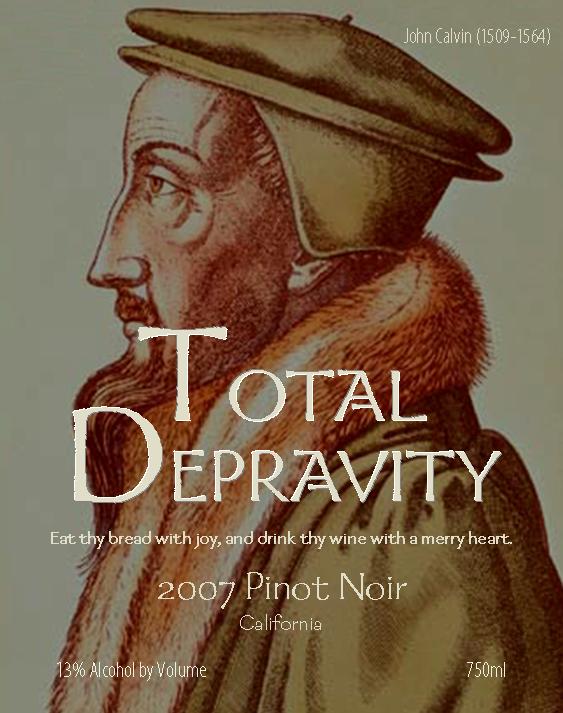
total-depravity-pinot-noir-2007.jpg (563×713)
THE  T  IN  TULIP

As we said earlier, the T in TULIP stands for total depravity.  This means that the nature of man was changed by the sin of Adam so that we became unable to make good decisions in our lives. 

Therefore, according to this concept, God has to give us the will to act before we can come to Him.  He has to give us the faith before we can come to Him.  He has to show us we are selected for salvation by some subjective experience so that we can know we are chosen for salvation.  This concept was developed by Augustine.  Here is part of his argument taken from: THE AGES DIGITAL LIBRARY COLLECTIONS; THE NICENE AND POST-NICENE FATHERS;FIRST SERIES, VOLUME 3;by Philip Schaff, editor; TRANSLATED BY PROFESSOR J F. SHAW, LONDONDERRY.
ST. AUGUSTIN: THE ENCHIRIDION
OR
ON FAITH, HOPE, AND LOVE
CHAPTER 26
THROUGH ADAM’S SIN HIS WHOLE POSTERITY WERE CORRUPTED, AND WERE BORN UNDER THE PENALTY OF DEATH, WHICH HE HAD INCURRED
Thence, after his sin, he was driven into exile, and by his sin the whole race of which he was the root was corrupted in him, and thereby subjected to the penalty of death. And so it happens that all descended from him, and from the woman who had led him into sin, and was condemned at the same time with him, — being the offspring of carnal lust on which the same punishment of disobedience was visited, — were tainted with the original sin, and were by it drawn through divers errors and sufferings into that last and endless punishment which they suffer in common with the fallen angels, their corrupters and masters, and the partakers of their doom. And thus “by one man sin entered into the world, and death by sin; and so death passed upon all men, for that all have sinned.” By “the world” the apostle, of course, means in this place the whole human race.

CHAPTER 30
MEN ARE NOT SAVED BY GOOD WORKS, NOR BY THE FREE DETERMINATION OF THEIR OWN WILL, BUT BY THE GRACE OF GOD THROUGH FAITH
            But this part of the human race to which God has promised pardon and a share in His eternal kingdom, can they be restored through the merit of their own works? God forbid. For what good work can a lost man perform, except so far as he has been delivered from perdition? Can they do anything by the free determination of their own will? Again I say, God forbid. For it was by the evil use of his free-will that man destroyed both it and himself. For, as a man who kills himself must, of course, be alive when he kills himself, but after he has killed himself ceases to live, and cannot restore himself to life; so, when man by his own free-will sinned, then sin being victorious over him, the freedom of his will was lost. “For of whom a man is overcome, of the same is he brought in bondage.” This is the judgment of the Apostle Peter. And as it is certainly true, what kind of liberty, I ask, can the bond-slave possess, except when it pleases him to sin? For he is freely in bondage who does with pleasure the will of his master. Accordingly, he who is the servant of sin is free to sin. And hence he will not be free to do right, until, being freed from sin, he shall begin to be the servant of righteousness. And this is true liberty, for he has pleasure in the righteous deed; and it is at the same time a holy bondage, for he is obedient to the will of God. But whence comes this liberty to do right to the man who is in bondage and sold under sin, except he be redeemed by Him who has said, “If the Son shall make you free, ye shall be free indeed?” And before this redemption is wrought in a man, when he is not yet free to do what is right, how can he talk of the freedom of his will and his good works, except he be inflated by that foolish pride of boasting which the apostle restrains when he says, “By grace are ye saved, through faith.”

CHAPTER 31
FAITH ITSELF IS THE GIFT OF GOD; AND GOOD WORKS WILL NOT BE WANTING IN THOSE WHO BELIEVE
            And lest men should arrogate to themselves the merit of their own faith at least, not understanding that this too is the gift of God, this same apostle, who says in another place that he had “obtained mercy of the Lord to be faithful,” here also adds: “and that not of yourselves; it is the gift of God: not of works, lest any man should boast.” And test it should be thought that good works will be wanting in those who believe, he adds further: “For we are His workmanship, created in Christ Jesus unto good works, which God hath before ordained that we should walk in them.” We shall be made truly free, then, when God fashions us, that is, forms and creases us anew, not as men — for He has done that already — but as good men, which His grace is now doing, that we may be a new creation in Christ Jesus, according as it is said: “Create in me a clean heart, O God.” For God had already created his heart, so far as the physical structure of the human heart is concerned; but the psalmist prays for the renewal of the life which was still lingering in his heart.

CHAPTER 32
THE FREEDOM OF THE WILL IS ALSO THE GIFT OF GOD, FOR GOD WORKETH IN US BOTH TO WILL AND TO DO
            And further, should any one be inclined to boast, not indeed of his works, but of the freedom of his will, as if the first merit belonged to him, this very liberty of good action being given to him as a reward he had earned, let him listen to this same preacher of grace, when he says: “For it is God which worketh in you, both to will and to do of His own good pleasure;” and in another place: “So, then, it is not of him that willeth, nor of him that runneth, but of God that showeth mercy.” Now as, undoubtedly, if a man is of the age to use his reason, he cannot believe, hope, love, unless he will to do so, nor obtain the prize of the high calling of God unless he voluntarily run for it; in what sense is it “not of him that willeth, nor of him that runneth, but of God that showeth mercy,” except that, as it is written, “the preparation of the heart is from the Lord?” Otherwise, if it is said, “It is not of him that willeth, nor of him that runneth, but of God that showeth mercy,” because it is of both, that is, both of the will of man and of the mercy of God, so that we are to understand the saying, “It is not of him that willeth, nor of him that runneth, but of God that showeth mercy,” as if it meant the will of man alone is not sufficient, if the mercy of God go not with it, — then it will follow that the mercy of God alone is not sufficient, if the will of man go not with it; and therefore, if we may rightly say, “it is not of man that willeth, but of God that showeth mercy,” because the will of man by itself is not enough, why may we not also rightly put it in the converse way: “It is not of God that showeth mercy, but of man that willeth,” because the mercy of God by itself does not suffice? Surely, if no Christian will dare to say this, “It is not of God that showeth mercy, but of man that willeth,” lest he should openly contradict the apostle, it follows that the true interpretation of the saying, “It is not of him that willeth, nor of him that runneth, but of God that showeth mercy,” is that the whole work belongs to God, who both makes the will of man righteous, and thus prepares it for assistance, and assists it when it is prepared. For the man’s righteousness of will precedes many of God’s gifts, but not all; and it must itself be included among those which it does not precede. We read in Holy Scripture, both that God’s mercy “shall meet me,” and that His mercy “shall follow me.” It goes before the unwilling to make him willing; it follows the willing to make his will effectual. Why are we taught to pray for our enemies, who are plainly unwilling to lead a holy life, unless that God may work willingness in them? And why are we ourselves taught to ask that may receive, unless that He who has created in us the wish, may Himself satisfy the wish We pray, then, for our enemies, that the mercy of God may prevent them, as it has prevented us: we pray for ourselves that His mercy may follow us.

CHAPTER 33
MEN, BEING BY NATURE THE CHILDREN OF WRATH, NEEDED A MEDIATOR. IN WHAT SENSE GOD IS SAID TO BE ANGRY
            And so the human race was lying under a just condemnation, and all men were the children of wrath. Of which wrath it is written: “All our days are passed away in Thy wrath; we spend our years as a tale that is told.” Of which wrath also Job says: “Man that is born of a woman is of few days, and full of trouble.” Of which wrath also the Lord Jesus says: “He that believeth on the Son hath everlasting life: and he that believeth not the Son shall not see life; but the wrath of God abideth on him.” He does not say it will come, but it “abideth on him.” For every man is born with it; wherefore the apostle says: “We were by nature the children of wrath, even as others.” Now, as men were lying under this wrath by reason of their original sin, and as this original sin was the more heavy and deadly in proportion to the number and magnitude of the actual sins which were added to it, there was need for a Mediator, that is, for a reconciler, who, by the offering of one sacrifice, of which all the sacrifices of the law and the prophets were types, should take away this wrath. Wherefore the apostle says: “For if, when we were enemies, we were reconciled to God by the death of His Son, much more, being reconciled, we shall be saved by His life.” Now when God is said to be angry, we do not attribute to Him such a disturbed feeling as exists in the mind of an angry man; but we call His just displeasure against sin by the name “anger,” a word transferred by analogy from human emotions. But our being reconciled to God through a Mediator, and receiving the Holy Spirit, so that we who were enemies are made sons (“For as many as are led by the Spirit of God, they are the sons of God”): this is the grace of God through Jesus Christ our Lord.
(end of excerpts from Augustine’s teaching)

While it is obvious that many of the conclusions that Augustine has drawn have a basis in scripture, it is important to notice that he makes God responsible for everything, even the operation of our human will.  This may take us away from what the scriptures teach us about personal responsibility and use of our free will.  Augustine says that even faith and the ability to exercise our free will are gifts from God.  In one sense this is true, because God created us in the beginning and gave us the capacity to make choices between good and evil.  But in making us able to choose between good and evil, God gave us personal responsibility for making the choices of life.  Here are three stories taken from my collection of articles for the NJP which illustrate this point.

SAINTS BY CHOICE

Cain, Adam's oldest son, killed his brother Abel.  Cain was angry  because God accepted Abel's sacrifice of the best of his lambs, but God rejected Cain's sacrifice of some grain from his field.
           
God asked Cain, "Why are you angry? -- If you do well, will you not be accepted?  And if you do not do well, sin lies at the door.  And its desire is for you, but you should rule over it."  (Genesis 4:6-7, NKJ)
           
But Cain ignored God's advice, and killed his brother.  Cain became the father of an ungodly line of people who were all destroyed in the flood.
           
The writer of Hebrews tells us that Abel offered to God a pleasing sacrifice by faith.  (Heb 11:4)  Since faith comes by hearing God's word, (Rom 10:17) we know that God had told Cain and Abel that He wanted a sacrifice of the first and best of the lambs.  But apparently Cain thought it was not fair for him to have to offer a lamb since he was a grain farmer.  He brought what he believed was a proper offering and became angry when God did not accept his sacrifice.
           
Cain became a murderer by choice, and Abel became a saint by choice.  Today we should respect the witness of Abel, and offer God our lives as a living sacrifice, just as He has requested.  (Rom 12:1)
           
Cain showed that we cannot become sanctified by our own plan or our own works of righteousness.  God only accepts what is according to His will and commandment.  We should not think that we can substitute our own ideas for what God has clearly told us.
           
Some people seem to think that God should conform to their desires and to their opinions.  This must have been how Cain was thinking.  He chose rebellion and his anger controlled his actions so that he murdered his brother and was exiled from his family.
           
Today every person who knows the difference between good and evil is faced with the choice of obeying God for justification or rebelling against God for condemnation.  We choose whether to be a saint or a sinner.
           
Jesus died on the cross at Calvary to pay the price for every one's sins.  He took our terrible sins upon Himself and offered Himself as a sacrifice pleasing to his Father. (Isaiah 53)  Whoever believes in Jesus can become sanctified.  (John 3:14-18)
           
But we have a choice.  Some men love evil and are not willing to submit to the will of God.  God calls us by the message about His Son Jesus Christ to obey the gospel and offer our lives as a living sacrifice in His service.  Jesus is the author of eternal salvation to all who obey Him.  (Heb 5:9).
           
Jesus commanded that those who believed the gospel were to repent and be baptized for the remission of sins.  (Mark 16:16, Acts 2:38)  But some people believe that baptism is not needed for salvation, since salvation and sanctification is a gift of God through faith in Jesus Christ.  However a real faith is one that submits to the will of God. 
           
We need to remember that Jesus is the one who commanded baptism.  Baptism is God's work; a demonstration of our faith in the atoning death of Jesus, a sharing in His burial, and a trusting in His resurrection. (Rom 6:3-6).  The submission of our will to God by our choice makes baptism of value.  (Colossians 2:12, 1 Peter 3:21). 
           
We must be careful not to rebel against God as Cain did, but show our faith in God as Abel who respected the commandment of God.  Abel obeyed God and was justified; Cain rebelled against God and was condemned.  What is your choice?  Saint or sinner?

SINNERS BY CHOICE

God finished the creation in six days, looked it over, and said "It is very good." (Gen. 1:31)  He had made mankind in His own image, in the likeness of God.  Man was perfect in the day God created him.  God looked him over and said "It is very good."
           
But man did not remain good very long.  He chose to do as he pleased rather than obeying God who had made him. Adam and Eve were tempted by their human desires; things that looked good to them, things that appealed to their fleshly appetites, and the desire to exalt themselves. 
           
A little child born into the world today is like Adam and Eve in the beginning, perfect and innocent before God.  When that child becomes aware of good and evil and chooses to do evil, it is just like when Adam and Eve decided to eat the forbidden fruit.  Every person becomes a sinner by choice, and the bad choosing began with Adam and Eve.
           
Sin entered the world through one man, Adam, and all have sinned and come short of the glory of God.  (Rom. 3:23; 5:12)  But Jesus came to redeem or buy back sinners into a perfect relationship with God like Adam had in the beginning. 
           
When we say that Jesus came to redeem us we admit that we had a good relationship with God before we became sinners, that is, when we were innocent little children.  To redeem means to buy back or to pay the ransom price.  This shows that we once belonged to God before we became sinners.  (1 Peter 1:17-25)
           
Jesus told His disciples to allow little children to come to Him, because of such is the Kingdom of Heaven.  Obviously He would not have said this if little children are sinners. 
           
James, brother of our Lord Jesus, said this about sin; "Let no one say when he is tempted, 'I am tempted by God'; for God cannot be tempted by evil, nor does He Himself tempt anyone.  But each one is tempted when he is drawn away by his own desire and enticed.  Then when desire has conceived, it gives birth to sin; and sin, when it is fullgrown, brings forth death." (James 1:13-15, NKJ)
           
John, best friend and apostle of Jesus, said this, "Do not love the world or the things in the world.  If anyone loves the world, the love of the Father is not in him.  For all that is in the world -- the lust of the flesh, the lust of the eyes, and the pride of life -- is not of the Father but is of the world.  And the world is passing away, and the lusts of it; but he who does the will of God abides forever. (1 John 2:15-17, NKJ)
           
We became sinners by choice when we learned the knowledge of good and evil and chose to do evil.  We can become children of God when we choose to accept the redemption of the blood of Christ through the gospel. 
           
A sinner who hears the gospel is both able to believe it and obey it, because God never asks us to do anything impossible.  No man has to wait on God for his salvation, but he must accept the free gift of salvation that is in Jesus Christ. (Acts 2:38; Mark 16:15-16)

Augustine’s concept of total depravity expresses the idea that man can not make a choice to receive salvation.  But the Bible clearly teaches that Jesus died so that who ever believes may have salvation.  The gospel is to be preached to every person, and the one who believes will be saved.  God is not a respecter of persons, but is willing that everyone be saved.  The gospel is God’s power for salvation to everyone who believes.  God is not willing that any should perish, but that all should come to repentance. 
           
But the idea of total depravity denies man’s ability by his free will to understand that he is a sinner, to believe that Jesus is the Son of God, to repent of sins, and to decide that he wants to obey the gospel.  However, in recognition of the need for man to show in some way that God has chosen them for salvation, followers of Augustine have developed the sinner’s prayer response where a statement is made accepting Christ as savior. 
           
But Jesus said that repentance and remission of sins should be preached beginning at Jerusalem.  And Peter stood in Jerusalem and clearly stated that those who desire salvation should repent and be baptized in the name of Jesus for the remission of sins.  Acts 2:38 is in the Bible, along with Mark 16:15-16, Matthew 28:18-19, and many other scriptures teaching the importance of baptism as a decision of man’s free will to come to Christ and be united with Him by obeying the gospel.  Ridicule of those who refer to these passages as teachers of water regeneration is usually not justified.   

God put those scriptures in the Bible to be believed and obeyed.  But since Augustine and Calvin taught that a man who is totally depraved cannot make a good decision by his own human will, you will not hear a true Calvinist teaching that we accept Jesus as savior by repentance and baptism.  The Bible does teach that each person has the responsibility, when they hear the gospel, to believe and to come to Jesus for salvation.
             
TOTAL  DEPRAVITY?
           
Thousands attended the televised funeral in Paducah, Ky, Dec 5, 1997, of three Heath High School students who were gunned down by a classmate this week.  According to reports, Michael Cameal shot his fellow students as they finished praying in the school lobby.  Five others were wounded, including Missy Jenkins, who was left paralyzed from the waist down.
           
This is not the first time this year that a student has gone on a berserk rampage against his fellow students.  We must wonder what would possess someone to cause them to do such a terrible deed.  Is the individual responsible, or is society to blame?  A thoughtful study will lead to the conclusion that both the individual and society are to blame. 
           
When young people have been taught that it is not politically correct to pray in the school, and when a District Federal Judge orders that boards of education pass resolutions discouraging voluntary prayer, we should not be surprised when someone decides that attacking a prayer group would get them recognition.
           
And when the movies seen by our youth, and the video games they play, portray endless violence against people, we should not be surprised that we have those among us whose conscience does not work properly. 
           
Apostle Paul, writing to the Romans, warned about the result of rejecting God and trusting in human wisdom.  He says that “Professing to be wise, they became fools,”  --- “who exchanged the truth of God for the lie, and worshipped and served the creature rather than the Creator.”
           
And then it reads like today’s newspapers and television shows:  “For this reason God gave them up to vile passions. For even their women exchanged the natural use for what is against nature.  Likewise also the men, leaving the natural use of the woman, burned in their lust for one another, men with men committing what is shameful, and receiving in themselves the penalty of their error which was due.”

“And even as they did not like to retain God in their knowledge, God gave them over to a debased mind, to do those things which are not fitting; being filled with all unrighteousness, sexual immorality, wickedness, covetousness, maliciousness; full of envy, murder, strife, deceit, evil-mindedness; they are whisperers, backbiters, haters of God, violent, proud, boasters, inventors of evil things, disobedient to parents, undiscerning, untrustworthy, unloving, unforgiving, unmerciful;  who, knowing the righteous judgment of God, that those who practice such things are worthy of death, not only do the same but also approve of those who practice them.”  (Romans 1:21-32, NKJ)
           
We conclude that these things happen because individuals have rejected the knowledge that is of God and from God, revealed in the Bible and the history of the world.  Rejecting God’s truth, they decided to promote humanism, which is nothing more than a modern form of idolatry, the worship of mankind.
           
When people grow up in such a wicked environment as exists in the USA today, the preceding generations have to bear some responsibility.  God is merciful, but He does not overlook sin and rebellion.  As He said to Moses: “The LORD, the LORD God, merciful and gracious, longsuffering, and abounding in goodness and truth, keeping mercy for thousands, forgiving iniquity and transgression and sin, by no means clearing the guilty, visiting the iniquity of the fathers upon the children and the children's children to the third and the fourth generation." Exod 34:6-7,  NKJ)
           
People are not wicked just because they have been born into a sinful world; they are wicked by their own choice.  But evil influence is passed from generation to generation, and it multiplies if the righteous do not take a stand against sin.  There is a battle going on, and all of us are on one side or the other, good or evil.  Thank God that the students at Heath High School are determined to continue their prayers at the beginning of the school day.  They can make a difference in our society.  Faith in God will deliver us from bondage to sin. 
           
Just as Michael Cameal made the choice to kill his fellow students, he could make the choice to turn to Christ and be forgiven.  God is willing for all who will to come to Him through faith in Jesus Christ.  No one is excluded from His invitation. 

The Bible has too much to say about personal responsibility before God for us to try to hide behind the sins of Adam.  We sin in the same way Adam sinned, and we were created in the beginning capable of sin and accountable before God.  God gave law to demonstrate the accountability of mankind, and God will not overlook evil.  But He has provided the perfect solution for sin through Jesus Christ.  We have to use our human will to turn to Jesus through faith.  God does not force His salvation upon anyone. 

https://www.youtube.com/watch?v=HC9mclGFxRE